Showing posts with label Database. Show all posts

Tuesday, 27 October 2026

The Untold Truth About DP-300 Preparation

An adult professional stands at a crossroads, choosing between a dark, crumbling path representing exam dumps and a bright, solid path of structured learning leading to a modern Azure data center, emphasizing ethical DP-300 exam preparation.

In the dynamic world of cloud computing, Microsoft Azure stands as a dominant force, and skilled database administrators are in high demand. The Microsoft Certified - Azure Database Administrator Associate certification, anchored by the DP-300 exam, is a highly sought-after credential. It validates your expertise in managing Azure SQL solutions, a critical skill set for modern IT professionals. However, as with any high-stakes exam, there's a constant whisper in online forums and study groups about shortcuts: the infamous exam dumps. Today, we're going to peel back the layers and reveal the untold truth about DP-300 preparation, examining both the allure of these shortcuts and the profound benefits of a genuine, ethical study path. This article serves as your comprehensive guide to not just passing the dp 300 exam, but truly mastering the skills required to excel as an Azure Database Administrator.

Many aspiring professionals often wonder about the most efficient way to achieve their career goals. For those aiming for the MCA Azure Database Administrator title, the DP-300 exam represents a significant milestone. It's more than just a test; it's a gateway to demonstrating proficiency in administering Azure SQL solutions. This guide is designed to empower you with the knowledge to make informed decisions about your study methods, ensuring your certification is a testament to your true capabilities.

Understanding the DP-300 Exam: Administering Azure SQL Solutions

The DP-300 exam, officially known as Administering Microsoft Azure SQL Solutions, is a core component of the Microsoft Certified - Azure Database Administrator Associate certification. This credential is designed for database administrators, database developers, and individuals who manage data platforms built on Microsoft Azure SQL services. Passing this exam signifies your ability to implement and manage the operational aspects of cloud-native and hybrid data platform solutions built on Azure SQL Database, Azure Managed Instance, and SQL Server on Azure Virtual Machines.

Earning this certification not only validates your technical skills but also opens doors to enhanced career opportunities and potentially higher earning potential. It demonstrates to employers that you possess the hands-on experience and theoretical knowledge required to manage critical data infrastructure in the cloud. The dp 300 exam syllabus covers a wide range of topics, ensuring that certified professionals are well-rounded in their capabilities.

Key Exam Details for DP-300

Before diving into preparation strategies, it's essential to understand the logistics of the exam:

  • Exam Name: Microsoft Certified - Azure Database Administrator Associate
  • Exam Code: DP-300
  • Exam Price: $165 (USD)
  • Duration: 100 minutes
  • Number of Questions: Typically between 40-60 multiple-choice, drag-and-drop, and case study questions.
  • Passing Score: 700 out of 1000

These details are crucial for planning your study schedule and managing your expectations on exam day. For the most up-to-date information and to schedule your exam, you can visit the official Pearson VUE scheduling page: Pearson VUE Microsoft exams.

The Lure of Exam Dumps: A Risky Shortcut

The internet is rife with resources claiming to offer quick paths to certification, and among them, exam dumps are a common, albeit controversial, option. Exam dumps are essentially collections of actual exam questions, often recalled by previous test-takers and compiled into unofficial study materials. For someone feeling the pressure of a challenging exam like dp 300, the idea of having access to the real questions can be incredibly tempting.

The perceived benefits are clear: a seemingly effortless way to pass the exam, saving time and effort on comprehensive study. Candidates might believe they can simply memorize answers and secure their `Administering Azure SQL Solutions certification` with minimal fuss. However, this approach carries significant and often unseen risks that can severely impact your career and reputation.

Why Exam Dumps Are a Trap

While a quick pass might seem appealing, relying on exam dumps for your `dp 300 exam preparation` is a fundamentally flawed strategy for several reasons:

  1. Outdated and Incorrect Information: Exam questions, especially in rapidly evolving fields like Microsoft Azure, are frequently updated. Dumps quickly become obsolete, containing old questions, irrelevant topics, or even incorrect answers. Memorizing outdated information will lead to failure on the actual exam.
  2. Lack of Conceptual Understanding: Dumps promote rote memorization, not genuine understanding. The DP-300 exam assesses your ability to apply concepts, troubleshoot problems, and design solutions. Without a deep grasp of the `dp 300 exam topics list`, you won't be able to adapt to new scenarios or solve problems in a real-world environment.
  3. Ethical Violations and Certification Revocation: Microsoft strictly prohibits the use of unauthorized materials like exam dumps. If discovered, your certification can be revoked, and you may be banned from taking future Microsoft exams. This not only wastes your time and money but also stains your professional record.
  4. Undermined Credibility and Career Impact: A certification earned through dishonest means is ultimately hollow. When faced with real-world tasks, your lack of foundational knowledge will quickly become apparent. This can damage your professional reputation, hinder career progression, and limit your ability to secure better roles and salaries, negating the very purpose of certification.
  5. Incomplete Coverage: Dumps rarely cover the full breadth and depth of the `dp-300 exam objectives`. They are fragments, not comprehensive study guides. Relying on them leaves significant gaps in your knowledge, particularly in critical areas like security or high availability.

The 'untold truth' is that while exam dumps might offer a mirage of an easy path, they inevitably lead to professional dead-ends, compromised ethics, and a fragile skillset that crumbles under real-world pressure. True success in becoming a Microsoft Certified - Azure Database Administrator Associate requires dedication, legitimate study, and hands-on practice.

For a detailed breakdown of what to expect on the exam and its curriculum, you can refer to an excellent resource detailing the full syllabus for the Microsoft Administering Azure SQL Solutions Exam: Administering Azure SQL Solutions Exam Syllabus.

Ethical and Effective DP-300 Preparation Strategy

Now that we've debunked the myth of exam dumps, let's focus on a robust, ethical, and highly effective preparation strategy that ensures you not only pass the `dp 300` exam but also gain invaluable skills. This approach focuses on understanding, practical application, and leveraging official resources.

Deep Dive into the DP-300 Exam Syllabus

The foundation of effective preparation is a thorough understanding of the `dp 300 exam syllabus`. Microsoft provides clear categories and weightings for each section, guiding your study efforts. Let's break down each area:

Plan and Implement Data Platform Resources (15-20%)

This section focuses on the foundational aspects of deploying and configuring Azure SQL solutions. You need to understand the different deployment options available for Azure SQL and how to choose the right one for various scenarios. This involves evaluating the cost, scalability, and performance requirements of different data solutions.

  • Deployment Options: You should be proficient in deploying Azure SQL Database, Azure SQL Managed Instance, and SQL Server on Azure Virtual Machines. This includes understanding their unique features, use cases, and limitations. For instance, knowing when to opt for a PaaS offering (like Azure SQL DB) versus an IaaS solution (SQL Server on VM) is crucial.
  • Compute and Storage: Understanding how to configure compute and storage for Azure SQL resources is vital. This involves selecting appropriate service tiers (e.g., General Purpose, Business Critical), configuring vCore or DTU models, and managing storage performance and size.
  • Database Migration: A significant part of this objective involves planning and performing database migrations to Azure SQL. This includes assessing source databases, choosing appropriate migration tools (e.g., Azure Database Migration Service, Data Migration Assistant), and executing the migration process with minimal downtime.
  • Capacity Planning: Candidates must be able to perform capacity planning for Azure SQL resources, which involves estimating resource requirements based on workload characteristics and growth projections. This skill ensures that deployed solutions can handle expected demands efficiently.
  • Networking for Azure SQL: Configuring network connectivity and firewall rules for Azure SQL Database and Managed Instance is also part of this domain. Understanding virtual networks, private endpoints, and service endpoints is essential for secure and efficient communication.

Mastering this domain ensures you can lay a solid foundation for any Azure SQL solution, making informed decisions about resource allocation and deployment. It's about setting up your database environment for success from the ground up.

Implement a Secure Environment (20-25%)

Security is paramount in any data platform, especially in the cloud. This section is heavily weighted because it covers how to protect your Azure SQL resources from unauthorized access and data breaches. Your `microsoft dp 300 study guide` should dedicate significant attention to these topics.

  • Authentication and Authorization: You need to know how to implement various authentication methods, including Azure Active Directory (AAD) authentication, SQL authentication, and managed identities. Managing database roles, users, and permissions, including row-level security and dynamic data masking, is also critical.
  • Network Security: Configuring network security rules, such as virtual network service endpoints, private link, and firewall rules, is essential to restrict access to your Azure SQL resources. Understanding how to integrate with Azure Virtual Networks (VNet) for private connectivity is a key skill.
  • Data Encryption: Implementing data encryption at rest and in transit is a core competency. This includes understanding Transparent Data Encryption (TDE) for data at rest, Always Encrypted for sensitive columns, and secure communication using TLS.
  • Auditing and Threat Protection: Configuring Azure SQL auditing to track database events and setting up Azure Defender for SQL (formerly Advanced Threat Protection) to detect and respond to potential threats is crucial for maintaining a secure environment.
  • Vulnerability Assessment: Performing vulnerability assessments and remediating identified security weaknesses ensures a robust security posture. This proactive approach helps prevent potential breaches.

A strong understanding of these security measures is non-negotiable for any Azure Database Administrator. The ability to secure data is often the most critical aspect of the role, making this a high-priority study area for your `dp 300 certification cost` investment.

Monitor, Configure, and Optimize Database Resources (20-25%)

Once deployed, Azure SQL solutions require continuous monitoring and optimization to ensure peak performance and availability. This section focuses on the operational aspects of managing a healthy data platform.

  • Performance Monitoring: You should be proficient in using Azure Monitor, Azure SQL Database intelligent insights, Query Performance Insight, and other tools to monitor database performance. This includes identifying performance bottlenecks, analyzing wait statistics, and understanding resource utilization (CPU, memory, I/O).
  • Performance Optimization: This involves a range of techniques, such as optimizing queries, creating and managing indexes, configuring database auto-tuning, and implementing intelligent query processing features. Understanding how to reconfigure database resources (e.g., scaling up/down compute or storage) based on performance requirements is also vital.
  • Log Analytics and Kusto Query Language (KQL): Leveraging Azure Log Analytics workspaces to collect and analyze diagnostic logs from Azure SQL resources, and using KQL to extract meaningful insights, is a powerful skill for troubleshooting and trend analysis.
  • Capacity Management: Monitoring and managing storage capacity, including understanding storage auto-growth and planning for future growth, helps prevent service interruptions due to insufficient resources.
  • SQL Auditing and Diagnostics: Configuring and analyzing SQL Auditing data for security and compliance, as well as using diagnostic data to pinpoint issues, are essential skills. This includes understanding Extended Events and their application in troubleshooting.

Effective monitoring and optimization are ongoing tasks for a database administrator. Mastering these skills will ensure your Azure SQL solutions run efficiently and reliably, directly impacting user experience and business operations. This knowledge is key to passing the `how to pass microsoft dp 300 exam` challenge.

Configure and Manage Automation of Tasks (15-20%)

Automation is crucial for efficient and consistent database administration. This section focuses on leveraging Azure services to automate routine tasks, minimize manual intervention, and reduce operational overhead.

  • Azure Automation: You need to know how to use Azure Automation to create runbooks (PowerShell or Python scripts) for tasks like patching, backups, and database maintenance. This includes managing credentials, variables, and schedules within Azure Automation.
  • Azure Logic Apps and Azure Functions: Understanding how to integrate Azure SQL with Logic Apps and Azure Functions for event-driven automation is a key skill. This allows for complex workflows and custom task execution in response to specific triggers.
  • SQL Agent Jobs: For SQL Server on Azure Virtual Machines and Azure SQL Managed Instance, configuring and managing SQL Agent jobs for tasks like backups, index maintenance, and custom scripts remains essential.
  • Elastic Jobs: For Azure SQL Database, utilizing Elastic Jobs to run T-SQL scripts across multiple databases simultaneously is an important automation capability, especially for managing large fleets of databases.
  • Alerts and Notifications: Configuring Azure Monitor alerts and action groups to notify administrators of critical events (e.g., high CPU, low storage, failed backups) enables proactive issue resolution.

Automating tasks not only saves time but also reduces the risk of human error, leading to more reliable and predictable operations. This aspect of the `microsoft dp-300 training course` is highly practical and immediately applicable in real-world scenarios.

Plan and Configure a High Availability and Disaster Recovery (HA/DR) Environment (20-25%)

Ensuring that your data platform remains available and resilient in the face of failures is critical. This heavily weighted section focuses on implementing strategies for high availability and disaster recovery for Azure SQL solutions.

  • High Availability (HA) for Azure SQL Database: Understanding the built-in HA mechanisms for Azure SQL Database, including zone-redundant configurations, active geo-replication, and failover groups, is essential. You should know how to configure and test these features.
  • HA for Azure SQL Managed Instance: For Managed Instance, understanding its inherent HA through the underlying Azure infrastructure and configuring failover groups for cross-region HA is key.
  • HA for SQL Server on Azure VM: This involves configuring traditional SQL Server HA solutions like Always On Availability Groups or Failover Cluster Instances on Azure Virtual Machines, including understanding shared storage options (e.g., Azure shared disks, Storage Spaces Direct).
  • Disaster Recovery (DR) Strategies: Implementing DR strategies, such as point-in-time restore, geo-restore, and long-term backup retention, for various Azure SQL offerings is crucial. You must be able to plan and execute a DR drill.
  • Backups and Restores: Configuring automated backups, understanding backup retention policies, and performing database restores (including restoring to a specific point in time or to another region) are fundamental DR skills.
  • RPO and RTO: Understanding Recovery Point Objective (RPO) and Recovery Time Objective (RTO) and how different HA/DR solutions impact these metrics is vital for designing effective resilience strategies.

A robust HA/DR strategy is the backbone of any enterprise data platform. Mastering these concepts ensures your Azure SQL solutions can withstand outages and continue to provide critical services. This is a complex but rewarding area of study, often covered in depth by `microsoft dp 300 book` resources.

Leveraging Official Microsoft Resources

Microsoft provides an abundance of high-quality, official resources specifically designed to help you prepare for the `DP-300` exam. These are your most reliable and up-to-date sources of information.

  • Microsoft Learn: The official Microsoft Learn platform offers free, self-paced learning paths and modules directly aligned with the DP-300 exam objectives. These modules include conceptual information, hands-on labs, and knowledge checks.
  • Official Training Course: Consider enrolling in the official instructor-led course, DP-300T00-A: Implement scalable database solutions using Azure SQL. This course provides in-depth coverage of the exam topics with expert guidance and practical exercises.
  • Practice Assessments: Microsoft often provides practice assessments on the certification's official page to give you a feel for the exam format and question types. This is an excellent way to gauge your readiness. You can find more details on the official certification page for Azure Database Administrator Associate.
  • Documentation: The comprehensive Microsoft Azure documentation is an invaluable resource for deep-diving into specific services, configurations, and best practices.

Creating Your Personalized Microsoft DP-300 Study Guide

A well-structured `microsoft dp 300 study guide` is essential. Don't just read; actively engage with the material.

  • Outline the Syllabus: Start by creating an outline based on the official exam objectives and their weightings.
  • Allocate Time: Dedicate more study time to higher-weighted topics and areas where you have less experience.
  • Take Notes: Summarize key concepts in your own words. This active recall helps solidify understanding.
  • Create Flashcards: Use flashcards for key terms, commands, and Azure service names.
  • Review Regularly: Schedule regular review sessions to reinforce what you've learned and prevent forgetting.

The Power of Practice: DP-300 Practice Exam Questions and Labs

Theory is only half the battle. Practical experience is crucial for the `Administering Azure SQL Solutions certification`.

  • Hands-on Labs: Set up a free Azure account and get hands-on experience with Azure SQL Database, Managed Instance, and SQL Server on Azure VMs. Practice deploying, configuring, securing, monitoring, and optimizing these resources. There's no substitute for real-world interaction with the platform.
  • Quality Practice Exams: Invest in reputable `dp 300 practice exam questions` from trusted providers (not dumps!). These simulate the exam environment and help you identify weak areas. Focus on understanding *why* an answer is correct or incorrect, not just memorizing the answer itself. Look for practice tests that provide detailed explanations.
  • Scenario-Based Learning: Work through scenario-based questions that require you to apply your knowledge to solve practical problems. This is particularly important given the format of many Microsoft certification exams.

Engage with the Community

Learning is often a collaborative process. Join online forums, study groups, or local user groups focused on Azure SQL. Discussing concepts with peers, asking questions, and even teaching others can deepen your understanding. Websites like Microsoft Tech Community or relevant subreddits can be great places to connect.

For more insights into effective study techniques and resources, you might find valuable information on what top scorers use for `dp 300 azure exam preparation`.

Scheduling Your DP-300 Exam

Once you feel confident in your preparation, schedule your exam. Having a firm date can provide a powerful motivator. Don't wait until you feel 100% ready; aim for about 80-90% and use the remaining time for focused review. Remember, the `dp-300 exam duration and format` will test your knowledge application, not just recall.

Benefits of Genuine Certification and Career Path

Earning the `Microsoft Certified - Azure Database Administrator Associate` certification through legitimate means brings a host of tangible benefits that extend far beyond simply having a badge on your resume. It's an investment in your career and professional development.

Real-World Skills and Confidence

By genuinely learning the `dp 300 exam blueprint` and applying it through hands-on practice, you develop real-world skills that are directly applicable to your job. This translates into confidence in your abilities, allowing you to tackle complex database administration tasks with assurance. You become a proficient `MCA Azure Database Administrator`, equipped to handle the challenges of modern data platforms.

Enhanced Career Opportunities

The demand for skilled Azure Database Administrators is consistently high. This certification makes you a more attractive candidate for various roles, including Database Administrator, Azure Data Engineer, and Cloud Database Specialist. It signifies your commitment to professional growth and your capability to manage critical Azure SQL infrastructure. The `microsoft azure database administrator career path` can lead to senior roles and specialized positions in data governance or cloud architecture.

Higher Earning Potential

Certifications often correlate with higher salaries. Possessing a Microsoft Certified - Azure Database Administrator Associate certification demonstrates a specialized skill set that employers are willing to pay a premium for. While salaries vary by location and experience, certified professionals generally command better compensation packages. To get an idea of the market, you can explore average `microsoft certified azure database administrator associate salary` ranges on platforms like Glassdoor's Database Administrator salaries.

Credibility and Professional Recognition

A legitimately earned certification enhances your professional credibility. It's an independently verified testament to your expertise, recognized globally by the industry. As a `Microsoft Certified Professional`, you join a community of skilled individuals recognized for their technical prowess. You can read more about the history and value of the Microsoft Certified Professional program on Wikipedia.

Demystifying DP-300 Exam Logistics

Beyond the content, understanding the practical aspects of the exam day itself is part of effective `administering microsoft azure sql solutions exam preparation`. Being prepared for the logistics can reduce anxiety and help you focus on the questions.

Exam Duration and Format

The `dp-300 exam duration and format` are designed to thoroughly test your knowledge. You will have 100 minutes to complete 40-60 questions. The questions are not all multiple-choice; they can include drag-and-drop, hot area, case studies, and performance-based tasks. Case studies, in particular, require you to analyze a scenario and answer several related questions, often involving multiple technologies or design decisions. Time management is crucial, so practicing with `mca azure database administrator exam questions` in a timed environment is beneficial.

Understanding the Passing Score and Question Types

A score of 700 out of 1000 is required to pass. This doesn't mean you need to get 70% of the questions correct, as some questions may be weighted differently or be unscored (experimental questions). Focus on understanding the concepts rather than trying to guess a specific number of correct answers. The variety of question types ensures a comprehensive assessment of your skills, ranging from conceptual understanding to practical application.

DP-300 Certification Cost and Requirements

The `dp 300 certification cost` is $165 USD, though it can vary slightly by region due to currency conversion. This fee covers the cost of taking the exam. As for `azure database administrator associate requirements`, there are no formal prerequisites in terms of other certifications. However, Microsoft recommends that candidates have significant experience with Azure SQL Database, Azure SQL Managed Instance, and SQL Server on Azure Virtual Machines. Experience with operating and managing these database services, including monitoring, configuring, and optimizing, is highly advisable. While not strictly required, having foundational knowledge of Azure through certifications like AZ-900 can be helpful.

Common Pitfalls to Avoid in Your DP-300 Journey

Even with the best intentions, candidates can fall into common traps during their `dp 300` preparation. Being aware of these can help you steer clear and maintain an efficient study path.

  • Over-reliance on Single Resource: While official resources are excellent, relying solely on one book or one set of video lectures can leave gaps. Combine multiple reputable sources, including documentation, labs, and practice questions, for a holistic view.
  • Skipping Hands-on Practice: Azure is a practical platform. Simply reading about configuring a firewall or setting up geo-replication isn't enough. You must perform these tasks in an actual Azure environment. Without hands-on experience, even memorized answers will fail when faced with scenario-based questions.
  • Ignoring Weak Areas: It's tempting to focus on topics you're already good at. However, the exam tests across all objectives. Identify your weak areas through practice tests and dedicate extra time to mastering them, especially the higher-weighted domains.
  • Poor Time Management: Both during study and on the exam, time management is critical. Create a realistic study schedule and stick to it. During the exam, don't get stuck on one question for too long. Flag it and move on, returning if time permits.
  • Underestimating the Exam's Depth: The DP-300 is not a superficial exam. It requires a deep understanding of Azure SQL services, including their nuances and best practices. Superficial knowledge gained from quick reviews or, worse, exam dumps, will not suffice.

Your Journey to Success: How to Pass Microsoft DP-300 Exam

Passing the `microsoft dp 300 exam` is a challenging but achievable goal with the right approach. It's not about finding shortcuts, but about building a solid foundation of knowledge and practical skills. Embrace the learning process, engage with the technology, and commit to an ethical preparation journey. The rewards of genuine certification – real skills, career advancement, and professional credibility – far outweigh the fleeting appeal of deceptive quick fixes.

Start by downloading the official exam skills outline from Microsoft's website. Use this as your primary checklist for study. Complement your learning with practical labs in Azure. Take advantage of the `microsoft dp-300 training course` or equivalent self-paced modules on Microsoft Learn. Regularly test your knowledge with high-quality `dp 300 practice exam questions` and review the explanations thoroughly. Network with other professionals and leverage community resources. Your dedication to a comprehensive and honest study plan will be your greatest asset in achieving the Microsoft Certified - Azure Database Administrator Associate certification.

Conclusion

The journey to becoming a Microsoft Certified - Azure Database Administrator Associate through the DP-300 exam is a rewarding one. While the allure of exam dumps might momentarily appeal, the untold truth is that they are a dangerous shortcut leading to professional stagnation and ethical compromise. True mastery of `Administering Azure SQL Solutions` comes from diligent study, hands-on practice, and a commitment to genuine learning.

By embracing the official `dp 300 exam syllabus`, engaging with Microsoft Learn, and dedicating yourself to practical application, you will not only pass the exam but also build a robust skill set that empowers your career. Your certification will be a testament to your hard-earned expertise, opening doors to advanced opportunities and establishing you as a credible professional in the cloud database domain. Avoid the pitfalls, invest in real knowledge, and prepare for success. If you're looking for more guidance on cloud certifications, you might want to compare `azure vs aws certification` options to broaden your understanding.

Frequently Asked Questions (FAQs)

1. What is the DP-300 exam and why is it important?

The DP-300 exam, officially titled "Administering Microsoft Azure SQL Solutions," is a Microsoft certification exam that validates a candidate's skills in managing Azure SQL Database, Azure SQL Managed Instance, and SQL Server on Azure Virtual Machines. It is important because passing it earns you the Microsoft Certified - Azure Database Administrator Associate certification, which is highly valued in the industry for demonstrating expertise in cloud database administration and opens up significant career opportunities.

2. How long does it take to prepare for the DP-300 exam?

Preparation time for the DP-300 exam varies greatly depending on your existing experience with Azure SQL services and database administration. For individuals with some prior experience, 4-8 weeks of dedicated study (10-15 hours per week) might be sufficient. Newcomers to Azure SQL may require 10-12 weeks or more to cover the `dp 300 exam topics list` comprehensively, focusing heavily on hands-on labs and official `microsoft dp 300 study guide` materials.

3. Are exam dumps helpful for DP-300 preparation?

No, exam dumps are not helpful and are strongly discouraged for DP-300 preparation. While they might seem like a shortcut, they contain outdated or incorrect information, promote rote memorization over actual understanding, and violate Microsoft's exam policies. Relying on dumps can lead to failing the exam, certification revocation, and significant damage to your professional credibility, hindering your `microsoft azure database administrator career path`.

4. What are the best resources for studying for the DP-300 exam?

The best resources for DP-300 study include official Microsoft Learn modules and learning paths, the official instructor-led course (DP-300T00-A), comprehensive Microsoft documentation, and high-quality `dp 300 practice exam questions` from reputable providers. Hands-on experience with Azure SQL services through a free Azure account or sandbox environments is absolutely critical for success.

5. What kind of salary can I expect after earning the Microsoft Certified - Azure Database Administrator Associate certification?

Salaries for Microsoft Certified - Azure Database Administrator Associates can vary widely based on factors such as location, years of experience, additional skills, and the specific company. However, certified professionals generally command competitive salaries. Entry-level positions might start around $70,000-$90,000 USD, while experienced professionals with this certification can earn well over $120,000 USD annually. Consulting roles or senior positions might offer even higher compensation, reflecting the value of expertise in `administering azure sql solutions`.

Wednesday, 29 July 2026

Access Expert Status The MO-500 Exam's True Value Unpacked

A confident professional stands amidst dynamic, abstract data visualizations that transform from complex to clear, symbolizing the expert status and career advantages gained with the Microsoft Access MO-500 certification.

The world of data is the backbone of modern business, and within this realm, Microsoft Access stands as a powerful tool for managing and manipulating information efficiently. For professionals seeking to elevate their database management skills and validate their expertise, the Microsoft Access MO-500 exam represents a pivotal milestone. This certification isn't just another line on a resume; it's a testament to a deep understanding of Access functionalities, proving an individual's capability to design, maintain, and optimize robust database solutions.

In an increasingly data-driven landscape, possessing expert-level skills in Microsoft Access is a distinct advantage. The MO-500 exam is meticulously designed to assess and certify these advanced proficiencies. This article will unpack the true value of achieving this credential, exploring its comprehensive syllabus, the tangible benefits it confers, and practical strategies for preparation, ultimately guiding you on your path to becoming a certified Access expert.

What is the Microsoft Access MO-500 Exam?

The MO-500 exam is formally known as the Microsoft Office Specialist - Access Expert (Office 2019) certification. This credential is part of Microsoft's esteemed Office Specialist program, which recognizes individuals who have demonstrated proficiency in using Microsoft Office applications. Specifically, the MO-500 exam validates an individual's ability to perform advanced database tasks, including designing complex tables, creating sophisticated queries, and developing interactive forms and reports within Access 2019.

This certification is tailored for those who already have a foundational understanding of Access and are ready to tackle its more intricate features. It's for users who regularly work with databases, requiring skills beyond basic data entry and simple querying. The focus is on practical application, ensuring candidates can implement solutions that enhance data integrity, user experience, and reporting capabilities. For those looking to dive deep into the specific topics covered, a comprehensive overview of the Microsoft Access MO-500 exam syllabus can be found here: Microsoft Access Expert - Office 2019 exam syllabus.

The Unrivaled Value of MOS Access Expert (Office 2019) Certification

Earning the MOS Access Expert (Office 2019) certification provides a multitude of benefits that extend far beyond simply validating technical skills. It significantly enhances professional credibility and opens doors to new opportunities.

Career Advancement and Opportunities

Achieving the MO-500 certification can be a powerful catalyst for career advancement. It signals to employers that you possess an expert-level understanding of database management with Access, making you a valuable asset for roles that require robust data handling. This credential can lead to promotions, increased responsibilities, and even new job prospects in fields such as data analysis, business intelligence, and information management. It distinguishes you in a competitive job market, proving your dedication to continuous professional development.

Enhanced Productivity and Efficiency

The skills measured in the Microsoft MO-500 exam are directly applicable to improving daily workflows. By mastering advanced features like complex query design, form customization, and report generation, certified professionals can streamline data management processes, automate repetitive tasks, and produce more insightful reports. This translates into greater efficiency for individuals and their organizations, freeing up time for more strategic initiatives and reducing errors associated with manual data handling.

Industry Recognition and Credibility

Microsoft Office Specialist certifications are globally recognized industry standards. Holding the MOS Access Expert (Office 2019) title immediately confers a level of credibility that uncertified individuals often lack. It assures employers and clients that you have met a rigorous standard of excellence defined by Microsoft itself. This recognition can boost your professional reputation and instil confidence in your abilities, positioning you as a trusted expert in database management. For more details on what the certification entails directly from the source, explore the official Microsoft Access Expert certification page.

Skill Validation and Confidence

The preparation process for the MO-500 exam involves a thorough review and practical application of advanced Access features. Successfully passing the exam provides concrete validation of your expert-level skills. This official endorsement not only confirms your technical proficiency but also significantly boosts your professional confidence. Knowing that your skills have been objectively assessed and validated by Microsoft can empower you to take on more complex projects and challenges with assurance.

Competitive Edge in the Job Market

In today's highly competitive job market, certifications like the MOS Access Expert (Office 2019) provide a distinct competitive edge. Many employers actively seek candidates with certified skills, as it reduces the need for extensive in-house training and provides immediate assurance of competence. This certification can make your application stand out from the crowd, making you a more attractive candidate for employers looking for proven expertise in Microsoft Access.

Delving into the Microsoft Access MO-500 Exam Syllabus

Understanding the Microsoft Access MO-500 exam syllabus is paramount for effective preparation. The exam is structured to test your proficiency across five key domains, each encompassing a range of advanced tasks. This breakdown provides a comprehensive MO-500 Access Expert study guide, detailing the specific skills you'll need to master.

Manage databases

This section focuses on the overarching maintenance and customization of Access databases, ensuring their integrity, accessibility, and user-friendliness.

  • Maintain database integrity: This involves crucial tasks such as backing up and restoring databases to prevent data loss, compacting and repairing databases to optimize performance and fix corruption, and encrypting databases to secure sensitive information. Candidates must understand how to schedule these maintenance activities and verify their successful execution, ensuring data remains safe and readily available.
  • Manage database objects: You'll need to demonstrate proficiency in importing data from various external sources (e.g., Excel, text files, other Access databases) and exporting Access data to different formats. Linking tables from other databases without importing them is also a critical skill, allowing for dynamic data connections. Additionally, managing database objects includes effectively hiding and unhiding objects to streamline the navigation pane and organize complex databases, improving user experience and data security.
  • Customize the Access environment: This involves tailoring Access to meet specific user or organizational needs. Skills include modifying Access options to adjust default behaviors, customizing the Ribbon to add or remove commands, and personalizing the Quick Access Toolbar for quick access to frequently used functions. Understanding how to set startup options and create trusted locations for databases further ensures a secure and efficient working environment.

Create and modify tables

Tables are the foundation of any Access database, and this section tests your ability to design and manipulate them for optimal data storage and integrity.

  • Create and modify tables: This involves defining table structures, selecting appropriate data types for each field (e.g., Text, Number, Date/Time, Lookup Wizard), and setting field properties (e.g., field size, format, default value). A core skill is defining primary keys to uniquely identify records and setting foreign keys to establish relationships between tables, ensuring relational integrity.
  • Manage records: Proficiency in managing records includes adding new data entries, deleting obsolete records, and updating existing information accurately and efficiently. This also extends to understanding how to find and replace data across records, sort and filter records based on various criteria, and prevent duplicate entries where necessary.
  • Create and modify fields: Beyond basic field creation, this involves applying validation rules to fields to ensure data accuracy at the point of entry. Implementing input masks helps guide users in entering data in a specific format (e.g., phone numbers, postal codes). Setting default values, creating multi-valued fields, and understanding indexed fields (with or without duplicates) are also key aspects of this domain.
  • Establish table relationships: This is a critical aspect of relational database design. You must be able to create one-to-one, one-to-many, and many-to-many relationships between tables. Enforcing referential integrity is crucial to prevent orphaned records and maintain data consistency across linked tables. Understanding different join types (inner, outer, left, right) for effective data retrieval is also important for the MOS Access Expert (Office 2019) exam topics.

Create and modify queries

Queries are essential for extracting, analyzing, and manipulating data. This section covers various query types and their advanced functionalities.

  • Create and modify select queries: This is the foundation of data retrieval. You need to be able to apply single and multiple criteria to filter records, perform calculations using expressions (e.g., total, average, count), and sort query results. Creating custom fields (calculated fields) within queries to display derived information is also a key skill, alongside the ability to group data and use aggregate functions.
  • Create and modify action queries: These powerful queries modify data in bulk. This includes append queries to add records from one table to another, update queries to change existing data, and delete queries to remove records. Making table queries to create new tables based on query results is also important. Understanding the implications and safe execution of these queries is vital for anyone looking to pass Microsoft MO-500 exam.
  • Create and modify parameter queries: These queries prompt the user for input each time they are run, making them highly flexible for dynamic data retrieval. You must be able to design queries that accept single or multiple parameters and understand how to incorporate these parameters into criteria for filtering data.
  • Create and modify crosstab queries: Crosstab queries summarize data in a compact, readable format, similar to a pivot table, showing aggregate values for a group of records. This involves defining row headings, column headings, and the value to be summarized.
  • Create and modify SQL queries: While Access provides a graphical query builder, understanding basic SQL (Structured Query Language) is crucial. This includes writing simple SELECT statements, applying WHERE clauses for filtering, and using JOIN clauses to combine data from multiple tables. This foundational understanding allows for more complex and customized data retrieval beyond the standard query design grid.

Modify forms in layout view

Forms are the primary interface for user interaction with the database. This section focuses on enhancing their usability and appearance.

  • Modify form design: This involves adding and arranging various controls such as text boxes, labels, buttons, combo boxes, and list boxes. Setting control properties (e.g., control source, default value, enabled/locked) and understanding form properties (e.g., pop-up, modal, data entry) are essential for creating effective user interfaces. Applying themes to maintain a consistent look and feel across forms is also covered.
  • Arrange form controls: Efficient layout is key for user-friendly forms. This includes aligning controls precisely, stacking them to save space, and grouping related controls using group boxes or tab controls. Understanding how to manage the tab order for seamless navigation and resizing controls for optimal presentation are critical skills.
  • Format form controls: Visual appeal and clarity are paramount. This involves applying various formatting options like fonts, colors, background styles, and conditional formatting to highlight specific data or guide user attention. Setting display formats for numbers and dates, and applying specialized effects, helps create professional and intuitive forms.
  • Add interactive elements: Making forms dynamic is a significant part of expert-level design. This includes adding command buttons to perform actions (e.g., open a form, run a report, save a record), incorporating combo boxes and list boxes for data selection, and embedding subforms to display related data within a main form. Understanding how to link subforms to main forms correctly is vital for seamless data interaction.

Modify reports in layout view

Reports are crucial for presenting database information in a clear, professional, and printable format. This section covers advanced report customization.

  • Modify report design: This involves adding, moving, and resizing controls to optimize report layout. Setting control properties (e.g., control source, visibility) and report properties (e.g., page setup, print settings) are essential. Applying themes to ensure a professional and consistent appearance across reports is also part of this domain, ensuring adherence to design standards.
  • Arrange report controls: Effective report layout includes precisely aligning controls, using grouping and sorting options to organize data, and inserting page breaks for better readability. Understanding how to use report sections (Header, Detail, Footer, Group Header/Footer) to control where information appears on the report is fundamental for comprehensive report design.
  • Format report controls: Similar to forms, formatting is crucial for report clarity and visual impact. This includes applying fonts, colors, background styles, and conditional formatting to draw attention to important data points or trends. Setting number and date formats ensures data is presented correctly, while incorporating images and logos enhances the professional look.
  • Create calculated controls: Reports often require displaying summarized or derived information. This involves creating calculated controls within the report to perform operations such as summing totals, calculating averages, counting records, or displaying percentages. Understanding how to use expressions to define these calculations effectively is a key skill.

Preparing for Success: MO-500 Exam Preparation Tips

Successfully navigating the Microsoft Access MO-500 exam requires a structured approach and dedicated effort. Here are some comprehensive tips to guide your preparation journey.

Understand the Microsoft Access MO-500 Exam Syllabus Thoroughly

The first step in any effective preparation is a deep dive into the official MO-500 Access Expert exam blueprint. Don't just skim the topics; understand what each bullet point implies in terms of practical skills. Microsoft's certifications are very task-oriented, so visualize how you would perform each listed action in Access. Identify any areas where your current knowledge or experience is weak and prioritize those for intensive study. This detailed understanding will form the backbone of your study plan.

Hands-on Practice is Non-Negotiable

Theoretical knowledge alone will not suffice. The MO-500 exam emphasizes practical application. You must spend significant time working directly with Microsoft Access.

  • Build Sample Databases: Create several complex sample databases from scratch. Design tables, establish relationships with referential integrity, and populate them with realistic data.
  • Practice Query Design: Experiment with all types of queries: select, action (append, update, delete, make-table), parameter, and crosstab queries. Work on advanced Access queries and forms MO-500, creating complex criteria, calculated fields, and combining data from multiple tables using various join types.
  • Form and Report Customization: Spend hours designing and refining forms and reports. Practice adding and configuring controls, applying formatting, implementing conditional formatting, creating subforms, and adding calculated controls to reports. Focus on creating user-friendly interfaces and clear, insightful reports.
  • Database Management: Regularly practice tasks like compacting and repairing databases, backing up and restoring, importing and exporting data, and linking tables. Get comfortable with customizing the Access environment through options, the Ribbon, and the Quick Access Toolbar.
  • Macros and VBA Basics: While the core syllabus doesn't explicitly list "Microsoft Access macros and VBA MO-500" as a top-level domain, understanding how to use simple macros for automation (e.g., opening a form, running a query) or basic event procedures can be beneficial, especially if complex interactive elements are required in forms.

Utilize Microsoft Access Expert MO-500 Practice Questions

Practice questions are invaluable for familiarizing yourself with the exam format and identifying areas for improvement. Seek out reputable sources for practice exams that simulate the actual testing environment. These questions can help you gauge your understanding of specific concepts and improve your time management skills for the 60-minute exam duration. Analyzing incorrect answers is just as important as getting them right; understand why an answer is correct or incorrect.

Leverage Official Microsoft Resources

Microsoft often provides study guides, learning paths, or documentation that align with their certification exams. While a specific Exam Book/Training Name with URL was not provided, always check the official Microsoft Learn platform for any recommended resources or documentation related to the Microsoft Office Specialist Access Expert (Office 2019) objectives. These resources are designed to cover the skills measured in Microsoft MO-500 exam directly.

Time Management during the Exam

The MO-500 exam duration is 60 minutes, with 40-60 questions. This means you have roughly one to one-and-a-half minutes per question. Practice working under timed conditions to improve your speed and accuracy. Learn to quickly assess questions and move on if you get stuck, returning to them later if time permits. Effective time management is crucial for completing all tasks within the allocated period. You might find some useful insights on general certification exam preparation by exploring articles like this one on how to ace your Microsoft certification exam.

Join Study Groups or Forums

Connecting with other individuals who are also preparing for the MO-500 exam can provide invaluable support. Study groups allow you to share knowledge, discuss challenging concepts, and motivate each other. Online forums or communities dedicated to Microsoft certifications can also be a great resource for asking questions and gaining different perspectives on tricky topics.

Exam Details at a Glance

Understanding the logistical details of the Microsoft Access MO-500 exam is crucial for planning your certification journey.

  • Exam Name: Microsoft Office Specialist - Access Expert (Office 2019)
  • Exam Code: MO-500
  • Exam Price: $100 (USD) – Please note that prices can vary based on region and testing center. Always confirm the current price with your chosen test provider.
  • Duration: 60 minutes. This concise duration emphasizes the need for quick, accurate application of skills. The MO-500 Microsoft Access Expert exam duration requires candidates to be proficient rather than exploratory during the test.
  • Number of Questions: Typically between 40-60 questions. These questions are often task-based, requiring you to perform specific actions within a simulated Access environment.
  • Passing Score: 700 out of 1000. This threshold indicates a strong level of proficiency is required to achieve the certification.

Scheduling Your MO-500 Exam

Once you feel adequately prepared, scheduling your exam is the next step. The Microsoft Office Specialist exams, including the MO-500, are primarily administered by Certiport, a Pearson VUE business. You can find information on how to register and locate a testing center near you by visiting the official scheduling portal: Pearson VUE Certiport Schedule. It is advisable to schedule your exam well in advance to secure your preferred date and time.

Who Should Consider the MOS Access Expert (Office 2019) Certification?

The MOS Access Expert (Office 2019) certification is ideal for a diverse range of professionals who regularly interact with or manage data using Microsoft Access.

  • Database Administrators: Those responsible for the maintenance, security, and performance of Access databases will find the MO-500 invaluable for solidifying their advanced skills.
  • Business Analysts: Professionals who analyze data to inform business decisions will benefit from the ability to create complex queries and reports, extracting deeper insights from data.
  • Data Entry Specialists and Information Clerks: Individuals whose roles revolve around managing large volumes of data will find the expertise in form design and data integrity validation particularly useful for improving accuracy and efficiency.
  • Office Managers and Administrative Professionals: Anyone who manages information for small to medium-sized organizations, requiring the creation of custom database solutions for tracking, reporting, and organizing data, will gain significant advantage.
  • Students and Educators: For those studying information systems, business, or data management, this certification provides a strong foundation and a practical skill set recognized by employers.
  • Independent Contractors and Consultants: Professionals who offer database design or data management services can leverage the MO-500 to demonstrate their expert capabilities to potential clients, enhancing their marketability.

Essentially, anyone seeking to master the intricacies of Microsoft Access 2019 and leverage its full potential for sophisticated data management and reporting will find the MO-500 certification a worthwhile pursuit.

Career Opportunities for MO-500 Certified Professionals

Earning the Microsoft Access Expert (Office 2019) certification opens up a variety of career paths and enhances an individual's value in numerous data-centric roles. The demand for professionals skilled in managing and analyzing data continues to grow across industries.

  • Data Analyst: With advanced query and reporting skills validated by the MO-500, you are well-equipped to extract, transform, and present data for analytical purposes. You can design sophisticated reports and dashboards in Access to help businesses make informed decisions.
  • Database Specialist/Administrator: While Access is typically used for smaller-scale databases compared to enterprise-level solutions like SQL Server, an MO-500 certification confirms your ability to manage, maintain, and secure Access databases effectively, making you suitable for roles focused on departmental or project-specific data management.
  • Information Manager: In roles requiring the organization and flow of information, certified professionals can design efficient Access solutions to track assets, inventory, customer data, or project progress, streamlining operations and improving data accessibility.
  • Reporting Specialist: Many organizations require custom reports that aggregate data from various sources. Your expertise in advanced report design, calculated controls, and complex queries will be highly valued in creating detailed and insightful reports.
  • Office Administrator/Executive Assistant: In smaller organizations or specific departments, administrative roles often involve managing extensive data. The MO-500 empowers these professionals to create custom Access solutions that automate tasks, improve data organization, and generate tailored reports, elevating their contribution beyond traditional administrative duties.
  • Business Application Support Specialist: Understanding the inner workings of Access databases and their components allows certified individuals to provide effective support for business applications built on Access, troubleshooting issues and optimizing performance.

The broader landscape for computer and information technology occupations continues to expand rapidly, with strong growth projected across many specializations. Professionals with strong database skills, such as those validated by the MO-500, are foundational to this growth. For insights into general employment trends in technology, you might explore the Occupational Outlook Handbook from the Bureau of Labor Statistics. Your Access expertise can serve as a strong entry point or an enhancer for various IT-related roles.

The MO-500 Access Expert Exam Blueprint: A Strategic Approach

The MO-500 Access Expert exam blueprint outlines the core competencies and their relative weighting, though specific percentages are often only fully detailed in official guides. However, based on the syllabus topics, a strategic approach emphasizes mastery across all domains.

Each section – managing databases, creating and modifying tables, queries, forms, and reports – carries significant weight. Neglecting any one area can significantly impact your performance. The "skills measured in Microsoft MO-500 exam" are designed to ensure a well-rounded expert.

A strategic approach involves:

  1. Balanced Study: Allocate study time proportionally across all five main syllabus areas. Do not over-focus on one area at the expense of another.
  2. Hands-on Dominance: Recognize that this is a practical exam. Simply reading about concepts is insufficient. Every concept in the blueprint should be practiced in a live Access environment until you can perform the task efficiently and without reference.
  3. Problem-Solving Focus: Many exam questions will present a scenario and ask you to perform a task to solve a problem. Develop your problem-solving skills within Access, thinking critically about the most efficient and correct way to achieve a desired outcome.
  4. Review Core Concepts: While the exam focuses on expert-level skills, a solid understanding of fundamental Access concepts is crucial. Ensure your understanding of data types, primary/foreign keys, and basic database design principles is flawless, as these underpin all advanced operations.
  5. Practice Speed and Accuracy: With a 60-minute duration, speed combined with accuracy is key. Repeated practice helps you execute tasks quickly and confidently, reducing the time spent searching for commands or troubleshooting errors during the exam.

By approaching the exam with a comprehensive understanding of its structure and a commitment to extensive practical application, candidates can effectively navigate the MO-500 Access Expert exam blueprint and achieve certification.

Frequently Asked Questions About the Microsoft Access MO-500 Exam

1. What is the Microsoft Access MO-500 exam?

The Microsoft Access MO-500 exam, formally known as the Microsoft Office Specialist (MOS) Access Expert (Office 2019) exam, is a certification test designed to validate an individual's advanced proficiency in using Microsoft Access 2019. It assesses skills in managing databases, creating and modifying tables, queries, forms, and reports at an expert level.

2. What skills does the MO-500 Access Expert study guide cover?

The MO-500 Access Expert study guide covers five core domains: managing databases (e.g., integrity, objects, environment customization), creating and modifying tables (e.g., data types, relationships, field properties), creating and modifying queries (e.g., select, action, parameter, crosstab, basic SQL), modifying forms in layout view (e.g., design, controls, interactive elements), and modifying reports in layout view (e.g., design, controls, calculated controls).

3. How long is the MO-500 Microsoft Access Expert exam duration?

The MO-500 Microsoft Access Expert exam duration is typically 60 minutes. Candidates are expected to complete 40-60 performance-based tasks within this time frame, demonstrating their practical skills in a simulated Access environment.

4. What are the benefits of passing the Microsoft Access Expert (Office 2019) certification?

Passing the Microsoft Access Expert (Office 2019) certification offers numerous benefits, including enhanced career advancement opportunities, increased productivity and efficiency in data management, global industry recognition, strong validation of expert-level skills, and a significant competitive edge in the job market. It showcases your ability to design and manage complex Access database solutions.

5. Where can I schedule the Microsoft Access MO-500 exam?

You can schedule the Microsoft Access MO-500 exam through Certiport, which is a Pearson VUE business. Their official website provides information on locating authorized testing centers and registering for the exam. It's recommended to visit the Certiport website directly to find the most current scheduling options and exam availability.

Conclusion

The Microsoft Access MO-500 exam is more than just a certification; it's a strategic investment in your professional future. Achieving the Microsoft Office Specialist - Access Expert (Office 2019) credential signifies not only your mastery of advanced database management principles but also your commitment to excellence and continuous skill development. From streamlining data processes to developing sophisticated reports and forms, the skills validated by the MO-500 are highly sought after in today's data-rich world.

By thoroughly understanding the Microsoft Access MO-500 exam syllabus, engaging in extensive hands-on practice, and leveraging targeted study resources, you can confidently prepare to earn this valuable certification. The benefits—from enhanced career prospects to greater workplace efficiency and undeniable credibility—make the effort truly worthwhile. Embrace the challenge, hone your Access expertise, and unlock a new level of professional recognition. For further guidance on optimizing your study habits for Microsoft certifications, consider reviewing these proven steps to ace your Microsoft certification. Begin your journey today and access expert status.

Thursday, 29 September 2022

RoQC and Microsoft simplify cloud migration with Microsoft Energy Data Services

Microsoft Energy Data Services, Microsoft Career, Microsoft Jobs, Microsoft Prep, Microsoft Certification, Microsoft Cloud, Microsoft Prep, Microsoft Preparation

The vast amount of data in energy companies slows down their digital transformation. Together with RoQC solutions, Microsoft Energy Data Services will accelerate your journey in democratizing access to data by providing an easy-to-deploy managed service fully supported by Microsoft.

Managing large data sets is complicated, and few industries have larger and more complex data sets than the energy industry. Data complexity and large investments in on-premises storage solutions and multitudes of computer systems prevent the transition to cloud-based sub-surface data management. A single company can have tens of petabytes of structured and unstructured data, which if not quality-assured, can lead to an increase in cost if it goes wrong.

Solutions from RoQC, a Norwegian software company, clean up structured data for energy companies. This makes data management more efficient from a time and cost perspective, and also makes decision-making more reliable.

With Microsoft Energy Data Services, energy companies can leverage new cloud-based data management capabilities provided by RoQC and Microsoft Energy Data Services.

Microsoft Energy Data Services is a data platform fully supported by Microsoft, that enables efficient data management, standardization, liberation, and consumption in energy exploration. The solution is a hyperscale data ecosystem that leverages the capabilities of the OSDU Data Platform™ and Microsoft's secure and trustworthy cloud services with our partners’ extensive domain expertise.

"Through machine learning, our software gives energy companies complete control of their data and assets. When the amounts of data are reduced, we eliminate uncertainty and duplication, and optimize the quality of the data sets. Traditionally a petrophysicist might spend a day or two cleaning up the logs for one well before they can be used for detailed analysis—with RoQC LogQA the same petrophysicist can clean hundreds of thousands of logs in the same timeframe. By cooperating with one of the largest platform providers in the world, we gain access to technology, competency, and markets it would be hard for us to get otherwise."—Bjørn Thorsen, CEO of RoQC.

New possibilities through cooperation


RoQC, a certified independent software vendor with Microsoft, has been able to expand its technology globally through the partnership.

Partner development manager for Microsoft Norway, Ole Christian Smerud, assures that the cooperation is mutually beneficial. "As a platform provider, we depend on strong partners to give our customers the best solutions. While we provide a platform, cloud competency, and access to an ecosystem for RoQC, they bring domain knowledge and relevance to their industry," he says.

Save millions with better data


RoQC believes that the energy industry struggles to take the step into the cloud, simply because of the data complexity and that most companies lack control over their data. By qualifying and quantifying data sets by identifying and deleting duplicates, RoQC Tools can reduce the data set size with commensurate dramatic savings in storage costs.

By reducing the amount of data by 10 to 30 percent, we’re talking millions of dollars in savings. The bigger the organization, the bigger the effect.

RoQC Tools are primarily designed so that data managers can perform tasks that are usually time-consuming as efficiently as possible. Very often they can complete a task that usually takes months, in a minute or two. Sometimes, the tasks would not be possible at all without the tools.

There is an obvious and well-documented correlation between increasing the quality of your data and reducing the risk of decisions based on that data. Geoscientists and project leaders in this field make decisions worth millions, maybe billions. You don’t want to make a decision of that magnitude based on insufficient or weak data.

RoQC believes the energy companies’ data is the key to shifting away from fossil resources. In the data sets, subsea energy companies have knowledge of "everything" about the ocean floor and sub-sea.

"Minerals from the ocean floor and sub-surface might be the next big thing for subsea oil-dependent nations like Norway. It is an already overused statement, but data is literally the new oil for this industry," says Bjørn Thorsen.

Preparing efficient data migration


RoQC provides both tools and consultants to enable a client to prepare their data prior to migrating the data to Azure. This preparation can include everything from simply identifying and removing duplicates to developing and implementing standards and then cleaning the data to comply with the standards. These preparations can be done directly in the clients’ normal (e.g., Halliburton/Schlumberger) interpretation platforms.

Furthermore, RoQC’s LogQA provides extremely powerful native, machine learning–based QA and cleanup tools for log data once the data has been migrated to Microsoft Energy Data Services, an enterprise-grade OSDU Data Platform on the Microsoft Cloud.

LogQA monitors the quality of the well log data that a client has stored on OSDU Data Platform. LogQA was partially developed in collaboration with Microsoft as part of Microsoft Energy Data Services, and LogQA is maintained on the latest OSDU Data Platform APIs and version/schema.

As LogQA is native to the Microsoft Cloud infrastructure there is no customer deployment required before a customer can utilize LogQA to monitor, identify, and rapidly rectify the data quality issues. LogQA is designed to work with typically energy industry client datasets, which is potentially millions of well logs.

How to work with RoQC Solutions on Microsoft Energy Data Services


For access to RoQC solutions, reach out to Bjørn Thorsen, CEO, RoQC Data Management AS, Norway at Bjorn@roqc.no.

Source: microsoft.com

Tuesday, 23 August 2022

Microsoft named a Leader in 2022 Gartner® Magic Quadrant™ for Data Integration Tools

In the modern business landscape, the intake of information and data is growing at an incredibly rapid pace. Organizations, regardless of size, need to quickly gain insights from all data to inform customer experiences and empower their employees. Current solutions are bespoke and siloed, leading to users spending considerable time and resources stitching together disparate products across a variety of vendors. This creates costly operational overhead and diverts resources away from value creation. In response to this high-pressure environment, many organizations are looking for cutting-edge data integration platforms and resources, and Microsoft is fully invested in empowering these companies to succeed.

We are excited to share that Gartner has positioned Microsoft as a Leader once again in the 2022 Gartner Magic Quadrant for Data Integration Tools. We believe this recognition shows our continued growth and ongoing commitment to delivering comprehensive and cost-effective data integration solutions.

The Gartner Magic Quadrant for Data Integration Tools evaluated companies on a range of categories including data engineering, cloud migration, and operational data integration tasks.

Microsoft Career, Microsoft Skills, Microsoft Jobs, Microsoft Certification, Microsoft Tutorial and Materials, Microsoft Gartner, Microsoft Guides, Microsoft News

Translating data into a competitive advantage


It’s easy to be overwhelmed with the amount of data businesses are generating every day. Not only do organizations need to deal with the technical requirements of processing their data, they also are operating in a high-risk environment, where the regulatory challenges are significant and noncompliance can mean an expensive penalty.

Against this backdrop, Microsoft brings an end-to-end data integration strategy to drive competitive advantage and deliver better business outcomes. Regardless of where source data is coming from—from operational databases to software as a service (SaaS) to multicloud—Microsoft data integration serves as the foundation that brings this data together and prepares it for cloud-scale analytics.

To lay the groundwork for reliable data pipelines, organizations can choose from more than 100 connectors to seamlessly move data. New capabilities also enable connections without time-consuming export, transform, and load (ETL) processes, so users can achieve insights faster. Microsoft data integration works seamlessly to combine data and prepare it for analysis in a central, secure environment. Simplified data migration, low or no-code ETL, enterprise business workflows, metadata management, and data governance help boost productivity and empowers organizations to achieve more with data. The company’s entire data team—from data engineers to business analysts—can discover and use the data they need, whether users want to write their own queries or leverage a low-code environment to ingest and transform data.

Microsoft services for data integration


With tooling that delivers a comprehensive set of capabilities, organizations can build a solid data integration foundation.

Azure Data Factory is a managed cloud service that's built for petabyte-scale data ingestion, data transformation, and orchestration at scale. Use Azure Data Factory for data engineering (build, manage, and operationalize data ingestion and transformation pipelines), data and cloud migration (customers migrating data from on-premises or another cloud), and operational data integration (ongoing data integration and synchronization to support ongoing and critical business processes).

Azure Data Factory Studio is purpose-built to provide data engineers with a familiar and productive environment for authoring their data integration pipelines and data flows for code-free transformations at scale. The experience provides users with sophisticated control flow and orchestration capability to author robust data integration tasks that operate over large amounts of data. Hundreds of connectors enable data-source-specific connectivity from Azure Data Factory and Power Query.

Power Query is a data transformation and data preparation engine that delivers an approachable user experience with self-service and enterprise-ready connectors to hundreds of data sources, from cloud to on-premises. Power Query enables business analysts to handle data preparation tasks on their own for workloads across Power Platform, Dynamics 365, and Microsoft Excel.

Azure Synapse Link is a service that eliminates barriers between Microsoft data stores and Azure Synapse Analytics. Automatically move data from both operational databases and business applications without time-consuming ETL processes. Get an end-to-end view of the business by easily connecting separate systems—and democratize data access with a solution that brings the power of analytics to every data-connected team.

Azure Synapse Link already connects to a variety of Microsoft data stores, such as Azure Cosmos DB and Azure SQL Database, and will connect to more in the future. Here are the connections available now:

- Azure Synapse Link for Dataverse—now generally available.
- Azure Synapse Link for Cosmos DB—now generally available.
- Azure Synapse Link for SQL (both SQL Server 2022 and Azure SQL Database)—now in preview.

The future of data is integration


In this complex environment where data holds such immense value, our north star is to enable our customers to drive a data culture and power a new class of data-first applications. We want our customers to take intelligent action based on insights unlocked from their data, and turn it into competitive advantage, all while respecting and maintaining compliance. We do this by empowering every individual and organization, delivering data integration and analytic tools and resources to inform every decision, at any scale.

Source: microsoft.com

Sunday, 20 March 2022

Introducing dynamic lineage extraction from Azure SQL Databases in Azure Purview

Data citizens including both technical and business users rely on data lineage for root cause analysis, impact analysis, data quality tracing, and other data governance applications. In the current data landscape, where data is fluidly moving across locations (on-premises to and across clouds) and across data platforms and applications, it is increasingly important to map the lineage of data. That’s why we’re introducing dynamic lineage extraction currently in preview.

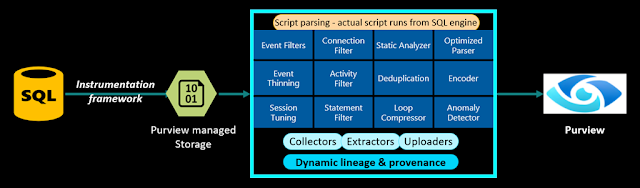
Conventional systems map lineage by parsing data transformation scripts, otherwise called static code analysis. This works well in simple scenarios. For example, when a SQL script is used to produce a target table Customer_Sales by joining two tables called Customer and Sales, static code analysis can map data lineage. However, in many real use cases, the data processing workloads are quite complicated. The scripts could be wrapped in a stored procedure that is parametrized and uses dynamic SQL. There could be a decision tree with an if then else statement executing different scripts at runtime. Or simply, data transactions could have failed to commit at runtime.

In all these examples, dynamic analysis is required to track lineage effectively. Even more importantly, static lineage analysis does not associate data and processes with runtime metadata, limiting customer applications significantly. For instance, dynamic lineage encoding by whom and when a stored procedure was run, and from what application and which server, will enable customers to govern privacy, comply with regulations, increase time-to-insight, and better understand their overall data and processes.

Dynamic data lineage—Azure SQL Databases

Today, we are announcing the preview release of dynamic lineage extraction from Azure SQL Databases in Azure Purview. Azure SQL Database is one of the most widely used relational database systems in enterprises. Stored procedures are commonly used to perform data transformations and aggregations on SQL tables for downstream applications. With this release, the Azure Purview Data Map can be further enriched with dynamic lineage metadata such as run status, impacted number of rows, the client from which the stored procedure is run, user info, and other operational details from actual runs of SQL stored procedures in Azure SQL Databases.

Azure SQL Databases, Azure Purview, Microsoft Exam Prep, Microsoft Tutorial and Material, Microsoft Career, Microsoft Skills, Microsoft Jobs
Limited lineage metadata from static code analysis*

The actual implementation involves Azure Purview Data Map tapping into the instrumentation framework of the SQL engine, and extracting runtime logs to aggregate dynamic lineage. The runtime logs also provide actual queries executed in the SQL engine for data manipulation, using Azure Purview can map data lineage and gather additional detailed provenance information. Azure Purview scanners run several times a day to keep up the freshness of dynamic lineage and provenance from Azure SQL Databases.

Azure SQL Databases, Azure Purview, Microsoft Exam Prep, Microsoft Tutorial and Material, Microsoft Career, Microsoft Skills, Microsoft Jobs

To learn more about Azure Purview dynamic data lineage from Azure SQL Databases, check out the video:

Azure SQL Databases, Azure Purview, Microsoft Exam Prep, Microsoft Tutorial and Material, Microsoft Career, Microsoft Skills, Microsoft Jobs

Source: microsoft.com

Thursday, 5 August 2021

Microsoft Cloud for Healthcare expands portfolio with Azure Healthcare APIs

Announcing Azure Healthcare APIs

Today Microsoft Cloud for Healthcare is expanding our portfolio of interoperability data services for the health and life sciences industry. In October 2019, Microsoft became the first cloud with a fully managed, first-party service to ingest, persist, and manage structured healthcare data in the native FHIR format with the Azure API for FHIR. Today we’re expanding our health data services to enable the exchange of multiple data types in the FHIR format. For that reason, we’re renaming our services to the Azure Healthcare APIs.

Read More: MS-500: Microsoft 365 Security Administration

Purpose-built for the unique requirements of Protected Health Information (PHI), the Azure Healthcare APIs enable customers to ingest, manage, and persist data in the Microsoft Cloud for Healthcare. Anyone working with health data can leverage the Healthcare APIs to bring disparate sets of PHI together and connect it end-to-end with tools for machine learning, analytics, and AI.

Azure Healthcare APIs, Microsoft Cloud, Microsoft Tutorial and Material, Microsoft Exam Prep, Microsoft Career, Microsoft Learning, Microsoft Guides

Making real-world data accessible


“Give me all the medications prescribed and all the CT scan documents and their associated radiology reports for any patient older than 45 that has had a diagnosis of osteosarcoma over the last 2 years.”

The above statement is a common request to health data managers. It may come from doctors doing clinical research or data scientists, but we heard from many that filling this type of request, especially across large databases, could take months. Why Because most health systems need to query multiple data stores that don’t speak the same language, then extract the data files, and finally work to unify them in a batch for the user. Structured data like medications, diagnosis, and patient attributes might be stored in pharma or EHR databases, CT Scans are stored in the DICOM format, and radiology reports might be stored as unstructured text. By the time all the data is pulled, the information is stale.

Azure Healthcare APIs enable search and customizable queries like the one above to be filled in minutes. When you ingest and transform data from your systems of record through Azure Healthcare APIs, data is unified to create a longitudinal patient record with real-time data, collected and persisted in a consistent way according to common health data standards across multiple types of health data 

◉ Structured inputs like clinical records in HL7 or C-CDA, data from medical devices, services such as HealthKit and Google Fit, or genomics databases, can be ingested, transformed, and mapped to FHIR.

◉ Unstructured data can be mapped to natural language processing algorithms like Text Analytics for Health to annotate data from clinical notes or text documents and structure it in FHIR so it can be viewed alongside structured clinical data.

◉ Imaging data in DICOM formats can be ingested through an API gateway, and DICOMCast technology will extract relevant metadata from images and map it to patient records in FHIR.

◉ Biometric data from devices can be ingested through our Azure IoT Connector for FHIR and can provide important information on health trends to care teams to allow for timely interventions and remote care.

Empowering real-world data to fuel real-world evidence


As we look to the future of the health industry, enabling searchability across your systems of record is a powerful starting point, but Azure Healthcare APIs go beyond data ingestion and management to accelerate what you can do with data in the cloud. Clinical inputs can be blended with other patient-based “big data” sets like social determinants of health. As real-world data plays an increasing role in health care decisions, Azure Healthcare APIs empower your data to support Real-world evidence pipelines such as support for coverage decisions, clinical trials pipelines, and observational studies.

Azure Healthcare APIs, Microsoft Cloud, Microsoft Tutorial and Material, Microsoft Exam Prep, Microsoft Career, Microsoft Learning, Microsoft Guides

Azure Healthcare APIs give you control over where your data goes and how it’s accessed through role-based access control. Streamlined connectors allow you to quickly export data for deep learning and AI frameworks in Azure Data Science VMs or Azure Synapse. If you are preparing data for secondary use, Tools for Anonymization allow you to rapidly de-identify blended data sets and quickly spin up workspaces for research. Data Science workloads are simplified with automated methods to encrypt, substitute, crypto-hash, perturb, date-shift, and generalize, and templates are available to apply expert determination.

Transforming your organization through real-world action


We’re excited to make it easier to develop AI with health data, but even more important to the future of healthcare is how Microsoft Cloud for Healthcare empowers you to scale it. As you illuminate new insights with your data, it’s easy to quickly connect to, or to connect your data and AI outputs through FHIR APIs or SMART on FHIR back into the systems your teams use on the front lines. That means you’re putting your data in the hands of your team to illuminate new pathways, create new innovation, and deliver real-world action that transforms the way you deliver health.

Empowering our partners and customers


What’s most exciting about today’s announcement is the speed of innovation and impact our partners and customers are finding in Azure Healthcare APIs technology. Slawek Kierner, SVP of Enterprise Data & Analytics, and Cille Kissel, Lead Product Manager, both at Humana and Dr. Casey Taylor from John Hopkins University will be joining us at HIMSS this week to share the powerful transformation they are driving in their organizations and in their research with Azure Healthcare APIs.

Doing more with your health data in the cloud


Simply put, Microsoft Cloud for Healthcare empowers healthcare organizations to do more with their data. Whether it’s transforming the patient experience, creating collaborative workspaces for research teams, or quickly connecting to powerful analytics and visualization tools, it all begins with Azure Healthcare APIs.

Source: microsoft.com