Saturday, 1 January 2022

Introduction to Microsoft Azure | A cloud computing service

Microsoft Azure, Cloud Computing Service, Microsoft Azure Exam Prep, Microsoft Azure Guides, Microsoft Azure Certification, Microsoft Azure Learn, Microsoft Azure Skills, Microsoft Azure Jobs, Microsoft Azure Career

What is Azure?

Azure is Microsoft’s cloud platform, just like Google has it’s Google Cloud and Amazon has it’s Amazon Web Service or AWS.000. Generally, it is a platform through which we can use Microsoft’s resource. For example, to set up a huge server, we will require huge investment, effort, physical space and so on. In such situations, Microsoft Azure comes to our rescue. It will provide us with virtual machines, fast processing of data, analytical and monitoring tools and so on to make our work simpler. The pricing of Azure is also simpler and cost-effective. Popularly termed as “Pay As You Go”, which means how much you use, pay only for that.

Azure History

Microsoft unveiled Windows Azure in early October 2008 but it went to live after February 2010. Later in 2014, Microsoft changed its name from Windows Azure to Microsoft Azure. Azure provided a service platform for .NET services, SQL Services, and many Live Services. Many people were still very skeptical about “the cloud”. As an industry, we were entering a brave new world with many possibilities. Microsoft Azure is getting bigger and better in coming days. More tools and more functionalities are getting added. It has two releases as of now. It’s famous version Micorosft Azure v1 and later Microsoft Azure v2. Microsoft Azure v1 was more like JSON script driven then the new version v2, which has interactive UI for simplification and easy learning. Microsoft Azure v2 is still in the preview version.

How Azure can help in business?

Azure can help in our business in the following ways -

Read More: DP-900: Microsoft Azure Data Fundamentals

◉ Capitaless: We don’t have to worry about the capital as Azure cuts out the high cost of hardware. You simply pay as you go and enjoy a subscription-based model that’s kind to your cash flow. Also, to set up an Azure account is very easy. You simply register in Azure Portal and select your required subscription and get going.

◉ Less Operational Cost: Azure has low operational cost because it runs on its own servers whose only job is to make the cloud functional and bug-free, it’s usually a whole lot more reliable than your own, on-location server.

◉ Cost Effective: If we set up a server on our own, we need to hire a tech support team to monitor them and make sure things are working fine. Also, there might be a situation where the tech support team is taking too much time to solve the issue incurred in the server. So, in this regard is way too pocket-friendly.

◉ Easy Back Up and Recovery options: Azure keep backups of all your valuable data. In disaster situations, you can recover all your data in a single click without your business getting affected. Cloud-based backup and recovery solutions save time, avoid large up-front investment and roll up third-party expertise as part of the deal.

◉ Easy to implement: It is very easy to implement your business models in Azure. With a couple of on-click activities, you are good to go. Even there are several tutorials to make you learn and deploy faster.

◉ Better Security: Azure provides more security than local servers. Be carefree about your critical data and business applications. As it stays safe in the Azure Cloud. Even, in natural disasters, where the resources can be harmed, Azure is a rescue. The cloud is always on.

◉ Work from anywhere: Azure gives you the freedom to work from anywhere and everywhere. It just requires a network connection and credentials. And with most serious Azure cloud services offering mobile apps, you’re not restricted to which device you’ve got to hand.

◉ Increased collaboration: With Azure, teams can access, edit and share documents anytime, from anywhere. They can work and achieve future goals hand in hand. Another advantage of the Azure is that it preserves records of activity and data. Timestamps are one example of the Azure’s record keeping. Timestamps improve team collaboration by establishing transparency and increasing accountability.

Microsoft Azure Services

Some following are the services of Microsoft Azure offers:

1. Compute: Includes Virtual Machines, Virtual Machine Scale Sets, Functions for serverless computing, Batch for containerized batch workloads, Service Fabric for microservices and container orchestration, and Cloud Services for building cloud-based apps and APIs.

2. Networking: With Azure you can use variety of networking tools, like the Virtual Network, which can connect to on-premise data centers; Load Balancer; Application Gateway; VPN Gateway; Azure DNS for domain hosting, Content Delivery Network, Traffic Manager, ExpressRoute dedicated private network fiber connections; and Network Watcher monitoring and diagnostics

3. Storage: Includes Blob, Queue, File and Disk Storage, as well as a Data Lake Store, Backup and Site Recovery, among others.

4. Web + Mobile: Creating Web + Mobile applications is very easy as it includes several services for building and deploying applications.

5. Containers: Azure has a property which includes Container Service, which supports Kubernetes, DC/OS or Docker Swarm, and Container Registry, as well as tools for microservices.

6. Databases: Azure has also includes several SQL-based databases and related tools.

7. Data + Analytics: Azure has some big data tools like HDInsight for Hadoop Spark, R Server, HBase and Storm clusters

8. AI + Cognitive Services: With Azure developing applications with artificial intelligence capabilities, like the Computer Vision API, Face API, Bing Web Search, Video Indexer, Language Understanding Intelligent.

9. Internet of Things: Includes IoT Hub and IoT Edge services that can be combined with a variety of machine learning, analytics, and communications services.

10. Security + Identity: Includes Security Center, Azure Active Directory, Key Vault and Multi-Factor Authentication Services.

11. Developer Tools: Includes cloud development services like Visual Studio Team Services, Azure DevTest Labs, HockeyApp mobile app deployment and monitoring, Xamarin cross-platform mobile development and more.

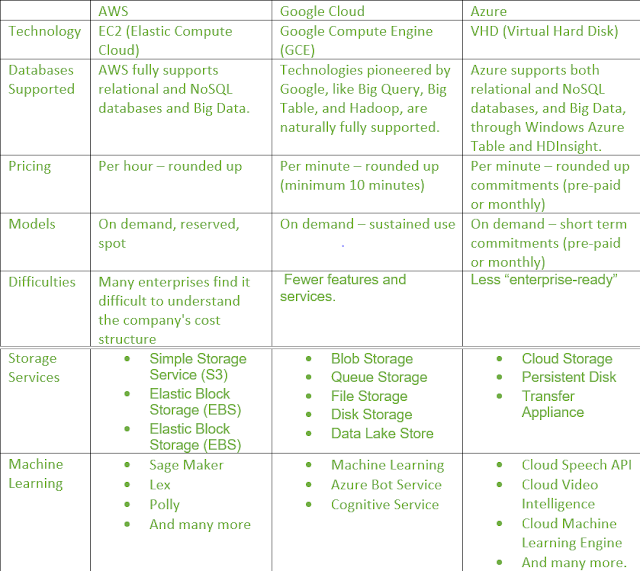
Difference between AWS (Amazon Web Services), Google Cloud and Azure
Microsoft Azure, Cloud Computing Service, Microsoft Azure Exam Prep, Microsoft Azure Guides, Microsoft Azure Certification, Microsoft Azure Learn, Microsoft Azure Skills, Microsoft Azure Jobs, Microsoft Azure Career

Source: geeksforgeeks.org

Friday, 31 December 2021

7 Ways AZ-900 Practice Test Can Help You Achieve Exam Success


The AZ-900
Microsoft Azure Fundamentals exam is the first stepping stone on the Microsoft Azure cloud certification track.

All About Microsoft Azure Fundamentals AZ-900 Exam

In brief, the Microsoft Azure Fundamentals exam is the first Azure exam that aims to prove basic-level knowledge of the Microsoft Azure cloud.

When it comes to the structure of Microsoft exam AZ-900, it consists of around 40-60 questions. The time given to finish Microsoft Azure Fundamentals is 60 minutes. The AZ-900 exam questions types are multiple-choice, case study, active screen, best answer, mark review, short answer, drag & drop, hot area, and so on. To pass the exam, you have to obtain a score of 700 out of 1000. Microsoft Azure Fundamentals AZ-900 exam cost is $99.

Overview of the Microsoft AZ-900 Azure Fundamentals Exam

This Microsoft exam is designed for both technical and non-technical individuals. Having prevalent IT knowledge and practical experience will help you learn the Microsoft Azure Fundamentals syllabus topics smoothly. Passing this one Microsoft exam will give you the Microsoft Certified Azure Fundamentals certification.

The exam demands you to prove high-level knowledge of the Azure cloud and its different service offerings across four key domains:

  • Understanding general cloud concepts (15-20%)
  • Understanding core Azure services (30-35%)
  • Understanding security, privacy, compliance, and trust (25-30%)
  • Understanding Azure pricing and support (25-30%)

Breaking through the Microsoft Azure Fundamentals AZ-900 Exam

As a beginner’s exam, you will be measured with your fundamental knowledge of cloud concepts and different Azure services. Furthermore, this certification does not need any previous experience as a programming wizard, and however, you should have an idea of what you are up to.

Microsoft provides free learning resources to ensure that you pass the Microsoft Azure Fundamentals exam with a flying score. These include the essential information on the required topics. On top of that, instructors deliver courses that will help intensify your knowledge of the Azure Portal. But more than these free modules and training courses, what’s most crucial to have throughout your preparation is the AZ-900 practice test! AZ-900 practice test are your saving grace to complement your exam resources.

7 Ways AZ-900 Practice Test Can Help You Achieve Exam Success

There are multiple advantages of giving an AZ-900 practice test before the actual exam, and it helps you reinforce your Microsoft Azure Fundamentals exam preparation. In the long shot that you need more motivation to convince yourself why you should give a practice test before Microsoft Azure Fundamentals exam, keep on reading!

1. Helps in Identifying Weak Areas

AZ-900 practice tests are an ideal way to identify your weak areas. While you appear in a practice exam, you run over definite AZ-900 exam questions you don't have a hint about the answer for. These AZ-900 exam topics are your weak points. You can write down these points and focus on the corresponding, so you have to work upon exam topics when you sit in the genuine exam.

2. Helps in Practice and Preparation

Practice makes an individual perfect! A similar saying spreads all over. The more you take the AZ-900 practice test, the more chances you should pass with a flying score. A practice test comprises questions like the genuine AZ-900 exam. Giving multiple AZ-900 practice tests will help you practice such inquiries and become an equivalent expert.

3. Boost Your Confidence to face challenges and AZ-900 Exam

AZ-900 practice test helps you explore various methods that you apply while you sit for the Microsoft Azure Fundamentals exam and choose which one fits you the best.

4. Helps you in Improving Your Score

Practicing AZ-900 practice tests multiple times will help you improve your actual exam score. The more practice questions you answer, the more experience you will acquire in managing such, and this will, therefore, help you enhance your score.

5. Improves Time Management Skills

When you answer many AZ-900 exam practice questions, your exam-taking and time management skills will improve. By taking the AZ-900 practice test, again and again, your brain will get used to dealing with them, and you won't set aside much effort to answer.

Giving a lot of AZ-900 practice tests will help you foster your strategy to address the difficulty. You can try different things with multiple approaches to tackle the exam and see which one works the best for you.


7. Gives Space for Self-Assessment

You become acquainted with your outcome after each counterfeit test, which furnishes you with a chance to self-assess—correcting your missteps after each mock test assists you with accomplishing the best form of yourself to introduce in the AZ-900 exam. The applicants can receive scores after each practice test. Toward the month's end, examining this score can help you keep tabs on your development and know in what segments have you performed well and what areas require more exertion.

Conclusion

Cloud computing is a sought-after skill that can be mastered with constant effort and patience. By passing the Microsoft Azure Fundamentals AZ-900 exam, you don’t just earn the coveted Microsoft Certified: Azure Fundamentals certification but also get proof of a brighter IT career. All you require is to study smart and use practice tests and relevant study materials such as training courses and study guides!

Thursday, 30 December 2021

Unleashing the true potential of 5G with cloud networks

For many, the intersection of 5G wireless and the Internet offers very little by way of new information, just from a quick, surface-level glance. However, things look very different when considered in light of the 5G New Radio (NR) standard.

For example, consider a new technology in the 5G NR called URLLC—which is short for ultra-reliable low-latency communications. Designed for mission-critical and latency-sensitive Internet services, URLLC is a configuration and technology feature that enables a new class of applications and services. These services include things such as remote control of robots; thin, tether-less augmented reality headsets, smart car collision avoidance systems, traffic control on roads, and entertainment services such as fast-action multi-player multi-region gaming.

The delay specification delivered by URLLC can be anywhere from one to four msec on-air latency, well within the required hard limit of the latency required by these applications. However, in many ways, this delay specification is simply not sufficient in light of the fact that many of these latency-sensitive applications only make sense in the context of the Internet. Interacting with users, devices, and cloud services over long distances forces one to think about the end-to-end latency characteristics that include the Internet.

Stretching the reach of low-latency applications

No one network can encompass all end-users and cloud services, so every network operator ultimately depends on the Internet at some point. Based on the locations of the source and destination, Internet latencies can vary anywhere from a single order to several orders of magnitude more than on-air 5G wireless latencies. This high latency can effectively remove all the benefits of the low-latency properties offered via the 5G network. As a result, the scope of the services that people enthusiastically look forward to gets reduced considerably.

Beyond URLLC, 5G traffic in general (voice and high-resolution video calls) will demand performance and reliability from both the wireless and Internet paths, even more so than traditional web and enterprise traffic.

Operators spend a lot of money to manage and maintain their networks and peering relationships, but so does Microsoft. The question then is, why are two massive industries doing the same thing? Because both parties move packets around, doesn’t it make more sense for them to collaborate?

Here, the well-managed, reliable, and performant Azure network should be thought of as the backbone that operators trust. With this shift in thinking will come all the advantages of innovation that IT companies like Microsoft are rapidly bringing in.

For example, large operators that run extensive national backbones can get tremendous benefit from extending their wide-area network (WAN) with Azure’s WAN. In this example, a 5G network that spans both will allow 5G devices to more effectively reach cloud services deployed on Azure datacenters. This includes first-party services such as, Xbox cloud gaming, as well as third-party services that Azure customers run. Smaller operators (or new operators) that do not have their own national backbones can save resources including time, human capital, and money, and instead leverage Azure’s extensive investment to build a unique 5G network on top of something that has already been proven reliable.

Azure’s planet-scale WAN

Azure maintains a massive WAN with significant capacity and one that is continuously growing. We have over 175,000 miles of lit fiber optic and undersea cable systems. This connectivity covers close to 200 network points of presence (PoPs) over 60 regions, across 140 countries.

Azure’s network is connected to many thousands of ISPs and other networks with significant peering capacity. Our global network is well-provisioned, with redundant fiber paths that can handle multiple simultaneous failures, it also has massive reserve capacity in unlit dark fiber. These optical fibers are fully owned or leased by Microsoft, and all traffic between and among Azure datacenters within a region or across regions is automatically encrypted at the physical layer.

This combination of redundant capacity to handle failures, dark capacity for significant growth, and research advancements being made in increasing transmission speeds means that we have a massive amount of spare capacity to serve 5G traffic to a broad array of new operators.

Challenges related to carrying 5G traffic over a cloud WAN

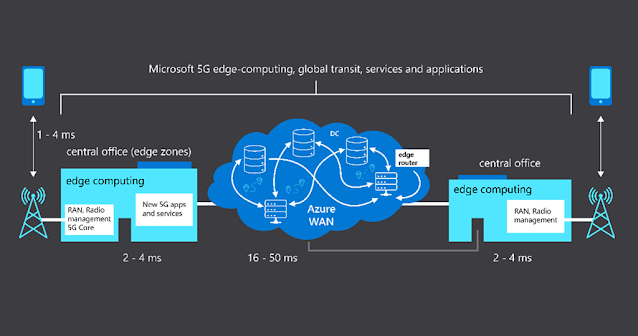
Figure 1 illustrates how packets can move from one client (in 5G terminology, a “User Equipment” (UE)) to another over the Azure cloud network, with extremely low latency.

5G, Cloud Networks, Azure Exam Prep, Azure Tutorial and Materials, Azure Prep, Azure Certification, Azure 5G
Figure 1: Unified platform.

With 5G, there is an intense amount of pressure on traditional metrics that include latency, jitter, throughput, reachability, and loss, by which transport quality is typically judged. With on-air 5G latencies reaching close to the sub-ms range, wired transport latency will likely dominate end-to-end performance. However, with on-air 5G throughputs in the tens of Gbps range in Enhanced Mobile Broadband (eMBB) mode, just a small number of UEs could overwhelm a single peering link that today would typically have a capacity of tens to hundred Gbps.

Beefing up capacity at the peering surface area and on backbone links that support them remains an expensive endeavor. Finding efficient paths through the maze of WAN links is also crucial to achieving business success. Outages are a fact of life for any cloud network, but 5G experiences will be more sensitive to packet loss and reachability than traditional web and enterprise traffic.

Reliability will need to be increased. This will happen by guarding against peering outages and overload, and by verifying configuration changes. The performance will also need to be increased. This includes supporting streaming audio and video services by actively reducing jitter and access queuing delays. Additional factors such as cost, safety, reachability, and regulatory and business policies also must be addressed.

Further, there will be a need to orchestrate wired transport for 5G deployments. 5G networks will deploy many network functions in a distributed fashion. Rigorous needs around scale-out and fault tolerance will make these deployments more complex than typical enterprise application deployments. Orchestrating cloud network capabilities, such as Virtual Networks, Virtual Network Peering, Virtual WAN, and private endpoints, all while meeting performance and policy constraints (business and regulatory), represents a new challenge.

Making Azure WAN great for 5G traffic


For many years, Microsoft researchers and engineers have been working on a hybrid-global traffic orchestrator for routing network packets across Azure’s WAN. Our orchestrator takes control away from classic Internet protocols and instead moves that control into software that we build and control for 5G traffic. We place the 5G flows that demand high performance on low-latency, high bandwidth paths to and from the Internet. Network flows that are cost-sensitive are instead routed through cheaper paths.

In effect, we have developed a fast-forwarding mechanism to build a 5G overlay on our existing WAN, thereby supporting a variety of 5G network slices with different wired transport properties, while avoiding interference with the operation of the underlying enterprise cloud network.

We have also extended our state-of-the-art network verification capability to cover complex network topologies by modeling Virtual WAN, Virtual Networks, and other network function virtualizations (NFVs), as well as modeling reachability using formal methods. Using fast solvers, we can verify reachability constraints on customer topologies, at deployment time or when undergoing a config change.

We have applied machine learning to predict the impact of peering link outages and congestion mitigation strategies and use the data to improve the availability of the WAN peering surface area.

Our expertise in optimization algorithms has been shown to ultimately reduce cloud networking spend. Techniques like these will be invaluable in carving out 5G paths on the overlay that are cost-efficient, but still meet the performance needs of every network slice.

5G, Cloud Networks, Azure Exam Prep, Azure Tutorial and Materials, Azure Prep, Azure Certification, Azure 5G
Figure 2: 5G WAN technical architecture. This is how we envision the different technical components will need to come together to serve 5G operators.

The significant upside for operators


To reiterate, Microsoft is heavily invested in running a well-managed, always-available global network. We have been incorporating multiple groundbreaking technologies, including scalable optimization, formal verification of routing policies, machine learning, and AI. We envision operators to not only be able to use our WAN to transfer 5G packets, with low latency, but also to benefit from multiple network services such as DDoS protection, firewalls, traffic accelerators, connection analytics, load balancers, and rate limiters, many of which we use in running existing Azure network workloads.

At Microsoft, we bring the full power of research and engineering leadership into our networks, rapidly incorporating innovation and new features to provide reliable, low-latency, low-cost service. In turn, this effort will open up the significant potential of next-generation services and applications as envisioned by the community at large. It is no understatement to say that collaboration between operators and Azure is key to unleashing the true power of 5G.

Source: microsoft.com

Tuesday, 28 December 2021

Microsoft named a Leader in 2021 Gartner® Magic Quadrant™ for Cloud DBMS Platforms

Microsoft, Microsoft Cloud DBMS Platforms, Microsoft Exam, Microsoft Exam Prep, Microsoft Exam Preparation, Microsoft Career, Microsoft Skills, Microsoft Jobs, Microsoft Study Materials

We are pleased to share that Microsoft is named a Leader in the 2021 Gartner® Magic Quadrant™ for Cloud Database Management Systems. This placement reflects our completeness of vision and ability to execute, and we feel is a testament to our ongoing innovation and the integration of a comprehensive cloud data management ecosystem into Microsoft’s end-to-end data platform.

Today’s organizations are modernizing their data platforms as part of a broader digital transformation and need to rely on data as a strategic asset and competitive differentiator. Azure offers a full range of solutions for businesses seeking to accelerate their recovery from economic uncertainty. Gartner evaluates these use cases across 15 distinct criteria to determine their Magic Quadrant placements.

Microsoft, Microsoft Cloud DBMS Platforms, Microsoft Exam, Microsoft Exam Prep, Microsoft Exam Preparation, Microsoft Career, Microsoft Skills, Microsoft Jobs, Microsoft Study Materials
Figure 1: Magic Quadrant for Cloud Database Management Systems.

An end-to-end data platform


Nearly thirty years ago, Microsoft released the first version of SQL Server. Since then, we’ve delivered a steady stream of innovation that consistently provides value to our customers. Today, we’ve evolved to offer a complete end-to-end data platform that focuses on three core capabilities businesses need for successful digital transformations:

◉ Limitless database performance and scale.
◉ Unmatched analytics and insights.
◉ Unified data governance.

In fact, our recent announcement of SQL Server 2022 in preview showcases our most Azure-enabled SQL Server release yet, with Azure SQL Managed Instance, Azure Synapse Analytics, and Azure Purview integrations in a single product.

We continue to invest in our Azure SQL family of databases to provide flexible options for app migration, modernization, and development. With up to 16 TB of storage, memory-optimized hardware, and native Azure Virtual Network support, SQL Managed Instance enables organizations to modernize their most mission-critical workloads onto a fully managed service—while providing the best of on-premises SQL Server features and functionality. What’s more, Hyperscale and serverless compute on SQL Database make it easy to cost-effectively future-proof applications.

Azure is also the best cloud for NoSQL and open-source databases. Azure Cosmos DB is a fully managed NoSQL database built to support production applications at any size or scale. We make it simple for developers to independently and elastically scale applications across any Azure region. New deployment options in our open source databases provide customers with maximum control alongside built-in capabilities for cost optimization and increased productivity.

We’re building a complete analytics continuum, with the goal of making intelligent, real-time data insights accessible to people across every organization. Since the debut of Azure Synapse Analytics, the number of Azure customers running petabyte-scale workloads has increased fivefold. Shortly after, we introduced Azure Synapse Link for Azure Cosmos DB, which created a simple, cloud-native HTAP solution for real-time business insights. Going one step further, we recently announced the general availability of Azure Synapse Link for Dataverse. This service enables immediate insights with high-value Microsoft Dynamics data.

Unified data governance is mission-critical to today’s businesses. Azure Purview, our unified data governance service, helps organizations manage and govern their on-premises, multicloud, and software-as-a-service (SaaS) data. With over 57 billion data assets discovered by customers already, Azure Purview ensures your Microsoft data estate is governed through deep integrations with data services in Azure, Microsoft 365, Power Platform, and more.

Building your applications on Microsoft’s comprehensive and connected platform means more of your data is immediately available to deliver more insights that can make your business smarter, creating a flywheel to help propel your business forward.

Global insights and momentum


According to Gartner, among the segments making up enterprise public cloud services, database platform as a service and cloud infrastructure and platform services saw the fastest growth in 2020, with 50.8 percent and 43.2 percent year on year, respectively. This growth is driven primarily by ongoing application migrations to the cloud, data center consolidations, and digital business initiatives.

Data and analytics play central roles in how organizations conduct business through a digital lens. In fact, Chief Data Officers (CDO) who successfully demonstrate return on investment from their data and analytics investments are 1.7 times more likely to consistently produce clear business value. In addition, they are 2.3 times more likely to reduce time to market and 3.5 times more likely to monetize their data. Gareth Herschel, Research Vice President at Gartner, wrote, “As enterprises look to recover from the profound disruptions of the last year, D&A [data and analytics] can help with tasks such as enabling business model transformation, optimizing resource allocation, or figuring out new ways to connect employees, customers and other stakeholders.”

Source: microsoft.com

Saturday, 25 December 2021

What is Databricks Data Science & Engineering?

Databricks Data Science & Engineering (sometimes called simply "Workspace") is an analytics platform based on Apache Spark. It is integrated with Azure to provide one-click setup, streamlined workflows, and an interactive workspace that enables collaboration between data engineers, data scientists, and machine learning engineers.

Databricks Data Science & Engineering, Azure Exam Prep, Azure Certification, Azure Learning, Azure Learn, Azure Preparation, Azure Online Guide, Azure Data

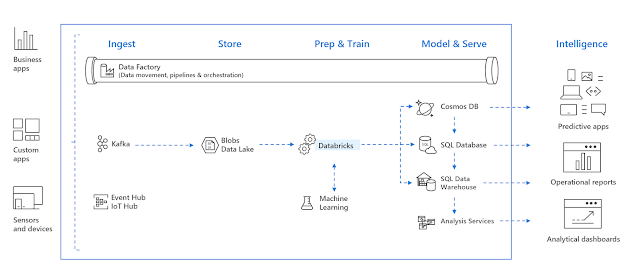
For a big data pipeline, the data (raw or structured) is ingested into Azure through Azure Data Factory in batches, or streamed near real-time using Apache Kafka, Event Hub, or IoT Hub. This data lands in a data lake for long term persisted storage, in Azure Blob Storage or Azure Data Lake Storage. As part of your analytics workflow, use Azure Databricks to read data from multiple data sources such as Azure Blob Storage, Azure Data Lake Storage, Azure Cosmos DB, or Azure SQL Data Warehouse and turn it into breakthrough insights using Spark.

Databricks Data Science & Engineering, Azure Exam Prep, Azure Certification, Azure Learning, Azure Learn, Azure Preparation, Azure Online Guide, Azure Data

Apache Spark analytics platform


Databricks Data Science & Engineering comprises the complete open-source Apache Spark cluster technologies and capabilities. Spark in Databricks Data Science & Engineering includes the following components:

Databricks Data Science & Engineering, Azure Exam Prep, Azure Certification, Azure Learning, Azure Learn, Azure Preparation, Azure Online Guide, Azure Data

◉ Spark SQL and DataFrames: Spark SQL is the Spark module for working with structured data. A DataFrame is a distributed collection of data organized into named columns. It is conceptually equivalent to a table in a relational database or a data frame in R/Python.

◉ Streaming: Real-time data processing and analysis for analytical and interactive applications. Integrates with HDFS, Flume, and Kafka.

◉ MLlib: Machine Learning library consisting of common learning algorithms and utilities, including classification, regression, clustering, collaborative filtering, dimensionality reduction, as well as underlying optimization primitives.

◉ GraphX: Graphs and graph computation for a broad scope of use cases from cognitive analytics to data exploration.

◉ Spark Core API: Includes support for R, SQL, Python, Scala, and Java.

Apache Spark in Azure Databricks


Azure Databricks builds on the capabilities of Spark by providing a zero-management cloud platform that includes:

◉ Fully managed Spark clusters

◉ An interactive workspace for exploration and visualization

◉ A platform for powering your favorite Spark applications

Fully managed Apache Spark clusters in the cloud


Azure Databricks has a secure and reliable production environment in the cloud, managed and supported by Spark experts. You can:

◉ Create clusters in seconds.

◉ Dynamically autoscale clusters up and down and share them across teams.

◉ Use clusters programmatically by invoking REST APIs.

◉ Use secure data integration capabilities built on top of Spark that enable you to unify your data without centralization.

◉ Get instant access to the latest Apache Spark features with each release.

Databricks Runtime


Databricks Runtime is built on top of Apache Spark and is natively built for the Azure cloud.

Azure Databricks completely abstracts out the infrastructure complexity and the need for specialized expertise to set up and configure your data infrastructure.

For data engineers, who care about the performance of production jobs, Azure Databricks provides a Spark engine that is faster and performant through various optimizations at the I/O layer and processing layer (Databricks I/O).

Workspace for collaboration


Through a collaborative and integrated environment, Databricks Data Science & Engineering streamlines the process of exploring data, prototyping, and running data-driven applications in Spark.

◉ Determine how to use data with easy data exploration.

◉ Document your progress in notebooks in R, Python, Scala, or SQL.

◉ Visualize data in a few clicks, and use familiar tools like Matplotlib, ggplot, or d3.

◉ Use interactive dashboards to create dynamic reports.

◉ Use Spark and interact with the data simultaneously.

Enterprise security


Azure Databricks provides enterprise-grade Azure security, including Azure Active Directory integration, role-based controls, and SLAs that protect your data and your business.

◉ Integration with Azure Active Directory enables you to run complete Azure-based solutions using Azure Databricks.

◉ Azure Databricks roles-based access enables fine-grained user permissions for notebooks, clusters, jobs, and data.

◉ Enterprise-grade SLAs.

Integration with Azure services


Databricks Data Science & Engineering integrates deeply with Azure databases and stores: Synapse Analytics, Cosmos DB, Data Lake Store, and Blob storage.

Integration with Power BI


Through rich integration with Power BI, Databricks Data Science & Engineering allows you to discover and share your impactful insights quickly and easily. You can use other BI tools as well, such as Tableau Software.

Source: microsoft.com

Thursday, 23 December 2021

Your hybrid, multicloud, and edge strategy just got better with Azure

Hybrid, Multicloud, Azure Exam Prep, Azure Tutorial and Materials, Azure Certification, Azure Career, Azure Preparation, Azure Skills, Azure Jobs, Azure Online Guide

One of the things I love most about being on the Azure team is the excitement around new innovations and how our customers use them to seize new opportunities. In the last few years, we’ve all faced unexpected challenges that have changed the way we work and how we think about digital transformation. Now, more than ever, digital technology is at the core of addressing the way our customers do business. That’s one reason why I was eager to join the Azure team and why I’m so excited about this year’s Microsoft Ignite. As cloud computing becomes ubiquitous, we at Microsoft see tremendous opportunity to help our customers drive innovation across their businesses and improve their own customers’ experiences.

With the Microsoft Cloud, we strive to provide the most trusted and comprehensive cloud to make this innovation and transformation happen. That’s why organizations of all types—from small businesses, governments, and non-profits to Fortune 500 companies—trust Microsoft as their technology provider. Since joining the team earlier this year, I’m inspired every day by seeing our customers develop products and services that seemed unthinkable and out of reach even just a few years ago.

During Microsoft Ignite this week, we’ll highlight the latest features and innovations in hybrid, multicloud, and edge computing. From end-to-end data capabilities and cloud-native applications to cross-functional collaboration, Microsoft cloud technologies help our customers deliver solutions and services faster to meet their own customers’ rapidly changing needs.

Today in this blog, I have the pleasure of sharing announcements across every one of these areas. Read on to learn more about what’s new today and how Microsoft Cloud and Azure are empowering our customers to innovate—and empowering the innovation to happen exactly where they need it most.

Bring comprehensive Azure capabilities to hybrid and multicloud environments with Azure Arc

Our customers have dozens, hundreds, or even thousands of servers, diverse applications, and databases in multiple locations spread across on-premises, edge, and multicloud environments. One of their key challenges is securing and managing their distributed environments consistently and building innovative applications using cloud-native technologies.

With Azure Arc, customers can take advantage of Azure’s comprehensive security, governance, and management capabilities for their Windows, Linux, SQL Server, and Kubernetes deployments in their datacenters, at the edge, or multicloud. Azure Arc also enables customers to build innovative, intelligent applications in any environment with first-party Azure application, data, and machine learning services.

I am thrilled that thousands of customers use Azure Arc today across a diverse set of scenarios. Royal Bank of Canada, the largest bank in Canada, is using Azure Arc-enabled data services to take advantage of always up-to-date cloud-native data services to modernize its large data estate. MAPFRE, a global insurance company with a presence on five continents, chose Azure Arc to secure and govern thousands of Windows and Linux servers spread across datacenters around the world.

At Microsoft Ignite, we’re announcing several new capabilities to our hybrid and multicloud products:

◉ Azure Arc on VMware vSphere and Azure Stack HCI: Customers with VMware vSphere and Azure Stack HCI systems can secure and govern existing virtual machines (VMs) and Kubernetes with Azure Arc. Today, we’re announcing the preview of lifecycle management of VMs on VMware vSphere and Azure Stack HCI deployments on-premises from the Azure Portal. This means customers migrating their on-premises deployment to Azure VMware Solutions can also do lifecycle management of VMs from the Azure Portal.

◉ Azure Arc-enabled Machine Learning capabilities update: Customers can train their machine learning models anywhere using Azure Machine Learning enabled by Azure Arc. Now, we’re adding in preview the ability to do inferencing to enable predictions using ML models anywhere.

◉ Azure Arc-enabled SQL Managed Instance update: We’re making directly connected mode through Azure Arc generally available to help customers deploy, manage, and secure their databases from Azure. With this, we offer customers the flexibility to run Azure Arc-enabled databases in connected and disconnected modes.

◉ Azure Virtual Desktop for Azure Stack HCI: For customers who want a modern cloud-based desktop and app virtualization solution on-premises for latency or regulatory reasons, we are pleased to announce the preview of Azure Virtual Desktop for Azure Stack HCI.

◉ Microsoft Defender for multicloud scenarios: Microsoft Defender for Cloud now extends Cloud Security Posture Management (CSPM) and Workload Protection capabilities to Amazon Web Services (AWS) allowing customers to secure their multicloud environments from a single place.

◉ Azure Migration and Modernization Program (AMMP) to support Azure Arc scenarios: Thousands of customers have accelerated their cloud journey with AMMP, and the program announced Azure Arc will be a supported scenario.

Transform business and prepare for the future with comprehensive Azure data features

Azure provides end-to-end data capabilities to empower innovation anywhere and transform any business. We have several announcements this week to help our customers be future-ready and ensure transformational success:

◉ Enhanced capabilities within Azure Synapse (preview): The general availability of Azure Synapse Link for Dataverse, enabling immediate insights with high-value Microsoft Dynamics 365 data, and the preview of Azure Synapse Link for SQL Server 2022. Azure Synapse Data Explorer is now part of Azure Synapse's unified analytics platform, so customers can easily access machine and user data to help improve business decisions.

◉ Azure Purview for unified data governance: To meet the increasing need for a comprehensive data governance service, Azure Purview helps organizations achieve a complete understanding of their data, wherever it’s located. Since its general availability, Azure Purview has helped customers discover over 57 billion data assets already. 

◉ Introducing SQL Server 2022 (gated preview): SQL Server 2022, the most flexible, scalable, cloud-connected SQL Server release yet, is now available in gated preview. SQL Server 2022 offers easier cloud integration than ever before and comes with choice and flexibility across language and platform, including Linux, Windows, and Kubernetes.

Build resilient, scalable, innovative applications from the cloud to the edge

With Microsoft technology, developers can address the real-world needs of their customers and businesses, using best-in-class tools and platforms that reduce the time from idea to value. Cloud-native development facilitates distributed applications that are more resilient and dynamically scalable while enabling portability in the cloud and at the edge. Azure Kubernetes Service (AKS), Azure Cosmos DB, and our exciting new cloud-native Azure Container Apps service, empower you to drive innovation at scale.

For example, Walmart’s e-commerce platform generates billions of dollars in annual revenue and grew 79 percent last year. The company needed a cloud-native database that could provide millisecond latency at a petabyte-scale and handle billions of daily requests with five nines (99.999 percent) availability during their busy holiday season. Walmart.com used Azure Cosmos DB for online transactions, utilizing multi-region writes for extremely high availability and sub-10-ms latency, providing millions of customers with the items they wanted and the experience they expect.

Create fusion teams to boost cross-functional collaboration and deliver apps faster

Efficiently delivering apps and services is top of mind within IT organizations. The speed and cost of developing those apps can force trade-off decisions about what gets delivered and what doesn’t. Introducing fusion teams into an organization can solve the app gap challenge and get users the apps they want and need. Fusion teams connect IT professionals with pro developers and makers in the business to build low-code apps more quickly than traditional development.

To enable fusion teams, key new features in Microsoft Power Platform are now available to enhance collaboration between makers and developers, accelerate code through Microsoft Power Fx, distribute branded apps natively on the app stores in Power Apps, and allow customers to use Azure subscriptions to distribute Power Apps without needing to acquire pre-paid licenses.

Using Power Platform with Microsoft Teams and key Azure services—like Functions and API Management—can increase an organization’s low-code application development value with faster ROI, accelerated time to market, and a reduction in overall development costs.

Source: microsoft.com

Tuesday, 21 December 2021

Simplify connectivity, routing, and security with Azure Virtual WAN

Over the past few months, we added several new capabilities to Azure Virtual WAN which customers can embrace to significantly simplify routing design and management in Azure, and secure traffic flows. Before we introduce these new capabilities, let us revisit what Azure Virtual WAN is.

Azure Virtual WAN is a unified hub and spoke-based architecture providing Network-as-a-Service (NaaS) for connectivity, security, and routing using the Microsoft Global Backbone. Customers transforming their networks by migrating to Azure cloud or utilizing hybrid deployments shared between Azure and their traditional data center or on-premises networks, take advantage of Azure Virtual WAN for scalability, ease of deployment, reduced IT costs, low latency, transit functionalities, high performance, and advanced routing.

Azure Virtual WAN, Azure Exam, Azure Exam Prep, Azure Exam Preparation, Azure Certification, Azure Career, Azure Guides, Azure Learning, Azure Study Materials

Customers architect networks for their services by defining the requirements along with three design aspects—connectivity, security, and routing, and then adopting key capabilities Azure Virtual WAN brings together, as shown in the figure below.

Azure Virtual WAN, Azure Exam, Azure Exam Prep, Azure Exam Preparation, Azure Certification, Azure Career, Azure Guides, Azure Learning, Azure Study Materials

Today, we are announcing new features that customers can utilize when they are applicable to their scenarios.

New partner solutions integrated with Azure Virtual WAN


We are excited to announce that two new partners are integrated with Azure Virtual WAN.

Azure Virtual WAN, Azure Exam, Azure Exam Prep, Azure Exam Preparation, Azure Certification, Azure Career, Azure Guides, Azure Learning, Azure Study MaterialsAzure Virtual WAN, Azure Exam, Azure Exam Prep, Azure Exam Preparation, Azure Certification, Azure Career, Azure Guides, Azure Learning, Azure Study Materials

◉ Fortinet FortiGate is the first dual-role SD-WAN and security-enabled Network Virtual Appliance (NVA) to be integrated natively with the Azure Virtual WAN hub, greatly improving the end-to-end experience and life-cycle management of using FortiGate NVAs in Azure.

Customers can select from a carefully curated menu of configurations and throughputs, and with a few simple clicks, can easily deploy and configure FortiGate in Azure. No more do you have to worry about setting up load balancers, user-defined routing and choosing the right virtual machine configurations and networking settings. With a few clicks in a managed application and a few quick configurations in the Azure Virtual WAN portal to configure our new routing model (Routing Intent and Routing Policies), you can easily configure your on-premises and virtual networks to send traffic to an Azure Virtual WAN hub hosted FortiGate next-generation firewall (NGFW) for inspection.

Customers can also rest assured that Azure Virtual WAN and FortiGate are built with high availability and resiliency in mind, allowing you to focus on running your business.

◉ Versa SASE integration with Azure Virtual WAN hub allows customers to take advantage of its top-notch SD-WAN capabilities with Azure Virtual WAN's signature any-to-any routing, all in one place for easy configuration and deployment. With this integration, customers can now deploy the Versa in the virtual hub for a central connectivity point into Azure and utilize Microsoft's backbone while blending network, security, and application awareness from Versa. 

Branch connectivity (Site-to-Site VPN)


The following features are now available for configuring connectivity from on-premises (also referred to as branches) to Site-to-Site VPN gateway in a virtual hub.

Custom traffic selectors

Customers using policy-based VPN may now specify custom traffic selectors on the VPN gateways in virtual hub, to assure pre-defined and consistent routing across site-to-site connections. Custom traffic selectors allow for specifying exact, wide, or narrow traffic selectors that the VPN gateway proposes or accepts during internet key exchange (IKE) negotiations.

Azure Virtual WAN, Azure Exam, Azure Exam Prep, Azure Exam Preparation, Azure Certification, Azure Career, Azure Guides, Azure Learning, Azure Study Materials

Packet Capture

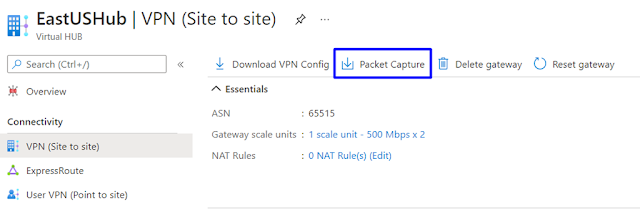
Connectivity and performance-related problems are often complex. It can take significant time and effort just to narrow down the cause of the problem. Packet capture on Azure Virtual WAN VPN gateway captures all packets across all connections for a holistic view. This can help you determine whether the problem is within the on-premises network or Azure, or somewhere in between. The niche filtering capability allows the user to focus on specific behaviors, packet types, source and destination subnets, and more to efficiently debug the issue.

Azure Virtual WAN, Azure Exam, Azure Exam Prep, Azure Exam Preparation, Azure Certification, Azure Career, Azure Guides, Azure Learning, Azure Study Materials

Azure Virtual WAN, Azure Exam, Azure Exam Prep, Azure Exam Preparation, Azure Certification, Azure Career, Azure Guides, Azure Learning, Azure Study Materials

Remote user connectivity (Point-to-Site VPN)


The resources that customers host in Azure or on-premises are made available to their remote users through Azure Virtual WAN by enabling Internet Protocol Security (IPsec) or Internet Key Exchange version 2 (IKEv2) or OpenVPN-based VPN connectivity to Point-to-Site VPN gateway in virtual hub. The design for managing authentication for users is now more flexible with the new feature below.

Remote or on-premises RADIUS servers

Users connecting to virtual hub can now be authenticated during VPN connection set up, using RADIUS servers located on-premises or in a remote spoke virtual network. Until today, only those RADIUS servers deployed in a virtual network connected to a virtual hub, could be used to authenticate users connected to that virtual hub.

This capability simplifies RADIUS deployments, reduces management overhead, and provides high-availability design options by using RADIUS servers across Azure regions or across Azure and on-premises. This capability will be available in early 2022.

Azure Virtual WAN, Azure Exam, Azure Exam Prep, Azure Exam Preparation, Azure Certification, Azure Career, Azure Guides, Azure Learning, Azure Study Materials

Advanced Routing


Below are the new routing capabilities of a virtual hub.

Hub to hub preference over ExpressRoute (in gated preview)

In some Azure Virtual WAN scenarios, customers choose to connect their on-premises to Azure using one ExpressRoute circuit connection to multiple hubs. When there is a VNET-to-VNET traffic flow between virtual networks connected to different hubs, the traffic flow traverses the multi-tenant routers, called MSEE, in Microsoft points-of-presence (POPs) where the ExpressRoute circuit terminates.

When customers enable the new feature for their Virtual WAN, the same traffic would then take an optimal path directly between the hubs, and therefore experience improved latencies. The new path is shown in the diagram using blue arrows. This will become the default behavior once the feature is generally available.

Azure Virtual WAN, Azure Exam, Azure Exam Prep, Azure Exam Preparation, Azure Certification, Azure Career, Azure Guides, Azure Learning, Azure Study Materials

To access the preview, contact previewpreferh2h@microsoft.com with your Virtual WAN ID, Subscription ID, and Azure Region.

BGP peering with Azure Virtual WAN hub (in gated preview)


Enterprises using Azure in hybrid infrastructure model often have SD-WAN appliances in their on-premises that connect to compatible Network Virtual Appliances (NVAs) in spoke virtual networks of a virtual WAN. In such scenarios, the NVAs serve as the gateways to Azure for their on-premises networks and routing information exchange between them is configured using Border Gateway Protocol (BGP). Customers establish connectivity between NVA and virtual hub using static routes, to access services deployed in virtual networks connected to hub, and to reach their on-premises connected to hub through ExpressRoute, until today.

With the BGP endpoint in virtual hub, the routing information from NVA to virtual hub can now be exchanged using BGP. This eliminates the need for complex static route configuration between NVA and virtual hub. In addition, all network changes within the on-premises networks that resulted in manual updates to such static routes in the past can now be dynamically advertised from NVA to hub through BGP, which further simplifies maintenance.

Azure Virtual WAN, Azure Exam, Azure Exam Prep, Azure Exam Preparation, Azure Certification, Azure Career, Azure Guides, Azure Learning, Azure Study Materials

Routing Intent and Policies enabling inter-hub security (in gated preview)

Customers securing traffic using Azure Firewall manager are required to set up policies manually to identify the flows. This applies to all traffic which is internet-bound or private—that is, between on-premises to virtual networks across Point-to-Site, Site-to-Site, and ExpressRoute connections and virtual hub. Using Routing Intent, customers can achieve this without complex manual configuration by simply specifying whether the virtual hub forwards internet-bound, private, or inter-hub traffic flow route through Azure Firewall or not. Furthermore, customers can configure their deployments to inspect all flows (East-West, North-South, and Azure as internet edge) using an Azure Firewall or Network Virtual Appliance (such as Fortinet) deployed in the Azure Virtual WAN hub.

Azure Virtual WAN, Azure Exam, Azure Exam Prep, Azure Exam Preparation, Azure Certification, Azure Career, Azure Guides, Azure Learning, Azure Study Materials

In conclusion, the needs of every organization are unique and as their networks are migrated from traditional data centers or on-premises to cloud-only, or hybrid model, the journey involves complex design decisions. Azure Virtual WAN aims at making this journey smooth with NaaS services that are simple to use and efficient. Each new capability discussed so far makes Azure Virtual WAN more beneficial to our customers.

Source: microsoft.com