Monday, 9 December 2019

A Sure Way to Pass Your Microsoft 70-743 Exam

Earning the MCSA: Windows Server 2016 certification demands that you accomplish a three-step certification exam process. It is essential that you pass these tests before you can receive the certification. The first step is the Microsoft 70-740 exam. The second step is 70-741, and the last one is 70-743. Passing these three MCSA: Windows Server 2016 exams demands perseverance and hard work. You must study hard to prepare for the exam as it is quite difficult and entails a lot to achieve favourable results. The good news is that many rewards come with it.

First, there are excellent career potentials available to the certification holders. With the Microsoft MCSA Windows Server 2016 – 70-743, you can assuredly land the job of your dream. This certification distinguishes you from the group and makes you more appealing in the eyes of the hiring manager. A certification like MCSA is also the best means of receiving your dream salary. Professionals with this Microsoft certification are in huge demand and receive high equivalent wages. So if you are ready to enhance your career potentials on all fronts, earning the MCSA certification is the best wayto make your dream come true.
Well, if you are aspiring to write this exam, here are some tips that will help in your preparation and make it more compelling.

Get an Appropriate Study Guide

The best way to start your exam preparation is to read through the official guide. Numerous exam guides have been created by experts in the field. However, you should ensure that you get the most suitable one among all. The best way to earn this is to read the reviews of other applicants are saying about your selected guide. You can explore Amazon and eBay for some of the best revision guides you can obtain. Reading through the study guide, concretely helps you explore the essential aspects that you need to emphasize on during your preparation. Some of the top study guides you should check out comprise the latest official guide for the Microsoft 70-743 certification written by Jason Kelington, and the MCSA Windows Server 2016 Study Guide authored by William Panek. These two study resources can be bought from Amazon, eBay, or Goodreads.

Get Adequate Resource Materials

It is advised that you get some additional study resource materials. You require books and videos to study for the exam. There are many resources available that can help you go through the certification exam preparation. Before you buy books and download videos, you must go through the exam objectives to know the definite resources you should get. The official Microsoft certification page has some links to various platforms where you can get the appropriate resource for your exam preparation.

Take Advantage of Microsoft Virtual Academy

Microsoft Virtual Academy is the official learning source presented by Microsoft. It is an online platform that is accessible for everyone taking any of the certifications from those offered by Microsoft. MVA offers several resource materials, including videos, articles, presentations, and other preparation resources for all Microsoft products and technologies. These resources are created to introduce you to the various core topics of the MCSA 70-743 certification exam. The platform also includes tips for every Microsoft certification exam. For a start, you might want to review the ‘What’s new’ part of the site, which lists the information about the new changes, features, and various aspects of Windows Server 2016. Without a doubt, Microsoft Virtual Academy is an excellent way to begin your certification exam preparation.

Take Practice Tests

In addition to the study materials, you also need to take some practice tests to evaluate your knowledge of the topics you have included. There are many practice tests on the 70-743 certification exam that you can get online. The practice tests will help you become familiar with the structure of the exam and its details. It is advised that you take the practice test topics. That is, as soon as you complete one topic, take a practice test on it to measure how you can understand its content. Do this repeatedly until you have understood all the aspects of the exam.
Conclusion
The importance of practice tests in an exam preparation cannot be overrated. Get all available resource materials you need for your exam and do a lot of studies. Learn from the multiple free resources on the Microsoft 70-743 certification available on Microsoft Virtual Academy. Lastly, take several practice tests as if your success relies on it (in fact, it really does).

Sunday, 8 December 2019

Microsoft has validated the Lenovo ThinkSystem SE350 edge server for Azure Stack HCI

Do you need rugged, compact-sized hyperconverged infrastructure (HCI) enabled servers to run your branch office and edge workloads? Do you want to modernize your applications and IoT functions with container technology? Do you want to leverage Azure's hybrid services such as backup, disaster recovery, update managment, monitoring, and security compliance?

Microsoft Study Material, Microsoft Online Exam, Azure Stack HCI, Azure Certifications

Microsoft and Lenovo have teamed up to validate the Lenovo ThinkSystem SE350 for Microsoft's Azure Stack HCI program. The ThinkSystem SE350 was designed and built with the unique requirements of edge servers in mind. It is versatile enough to stretch the limitations of server locations, providing a variety of connectivity and security options and can be easily managed with Lenovo XClarity Controller. The ThinkSystem SE350 solution has a focus on smart connectivity, business security, and manageability for the harsh environment.

Lenovo ThinkSystem SE350:


The ThinkSystem SE350 is the latest workhorse for the edge. Designed and built with the unique requirements for edge servers in mind, it is versatile enough to stretch the limitations of server locations, providing a variety of connectivity and security options and is easily managed with Lenovo XClarity Controller. The ThinkSystem SE350 is a rugged compact-sized edge solution with a focus on smart connectivity, business security, and manageability for the harsh environment.

The ThinkSystem SE350 is an Intel® Xeon® D processor-based server, with a 1U height, half-width and short depth case that can go anywhere. Mount it on a wall, stack it on a shelf, or install it in a rack. This rugged edge server can handle anything from 0-55°C as well as full performance in high dust and vibration environments.

Information availability is another challenging issue for users at the edge, who require insight into their operations at all times to ensure they are making the right decisions. The ThinkSystem SE350 is designed to provide several connectivity options with wired and secure wireless Wi-Fi and LTE connection ability. This purpose-built compact server is reliable for a wide variety of edge and IoT workloads.

Microsoft Azure Stack HCI:


Azure Stack HCI solutions bring together highly virtualized compute, storage, and networking on industry-standard x86 servers and components. Combining resources in the same cluster makes it easier for you to deploy, manage, and scale. Manage with your choice of command-line automation or Windows Admin Center.

Achieve industry-leading virtual machine (VM) performance for your server applications with Hyper-V, the foundational hypervisor technology of the Microsoft cloud, and Storage Spaces Direct technology with built-in support for non-volatile memory express (NVMe), persistent memory, and remote direct memory access (RDMA) networking.

Help keep apps and data secure with shielded virtual machines, network micro-segmentation, and native encryption.


You can take advantage of cloud and on-premises working together with a hyper-converged infrastructure platform in the public cloud. Your team can start building cloud skills with built-in integration to Azure infrastructure management services:

◉ Azure Site Recovery for high availability and disaster recovery as a service (DRaaS).

◉ Azure Monitor, a centralized hub to track what’s happening across your applications, network, and infrastructure, with advanced analytics powered by artificial intelligence.

◉ Cloud Witness, to use Azure as the lightweight tie-breaker for cluster quorum.

◉ Azure Backup for offsite data protection and to protect against ransomware.

◉ Azure Update Management for update assessment and update deployments for Windows Virtual Machines running in Azure and on-premises.

◉ Azure Network Adapter to connect resources on-premises with your VMs in Azure via a point-to-site VPN.

◉ Sync your file server with the cloud, using Azure File Sync.

◉ Azure Arc for Servers to manage role-based access control, governance, and compliance policy from Azure Portal.

By deploying the Microsoft + Lenovo HCI solution, you can quickly solve your branch office and edge needs with high performance and resiliency while protecting your business assets by enabling the Azure hybrid services built into the Azure Stack HCI Branch office and edge solution.

Saturday, 7 December 2019

Azure Cognitive Services for building enterprise ready scalable AI solutions

Azure Cognitive Services brings artificial intelligence (AI) within reach of every developer without requiring machine learning expertise. All it takes is an API call to embed the ability to see, hear, speak, understand, and accelerate decision-making into your apps. Enterprises have taken these pre-built and custom AI capabilities to deliver more engaging and personalized intelligent experiences. We’re continuing the momentum from Microsoft Build 2019 by making Personalizer generally available, and introducing additional advanced capabilities in Vision, Speech, and Language categories. With many advancements to share, let’s dive right in.

Personalizer: Powering rich user experiences


Winner of this year’s ‘Most Innovative Product’ award at O’Reilly’s Strata Conference, Personalizer is the only AI service on the market that makes reinforcement learning available at-scale through easy-to-use APIs. Personalizer is powered by reinforcement learning and provides developers a way to create rich, personalized experiences for users, even if they do not necessarily have deep machine learning expertise.

Giving customers what they want at any given moment is one of the biggest challenges faced by retail, media, and e-commerce businesses today. Whether it’s applying randomized A/B tests or supervised machine learning, businesses struggle to keep up with delivering unique and relevant experiences to each user. This is where Personalizer comes in, exploring new options to stay atop of previously unencountered influences on user behavior through a cutting-edge machine learning technique known as reinforcement learning. This technique allows Personalizer to learn from what’s happening in the world in real-time and update the underlying algorithm as frequently as every few minutes. The result is a significant improvement to your app usability and user satisfaction. When XBOX implemented Personalizer on their homepage, they saw a 40 percent lift in user engagement.

Azure Study Materials, Azure Tutorial and Material, Azure Certifications, Azure Learning, Azure Online Exam

Form Recognizer: Increase efficiency with automated text extraction and feedback loop


Businesses often rely on a variety of documents that can be hard to read; these documents are not always cleanly printed, and many include handwritten text. Businesses including Chevron use Form Recognizer to accelerate document processing through automatic information extraction from printed forms. This frees their employees to focus on more challenging and higher-value tasks.

Form Recognizer extracts key-value pairs, tables, and text from documents including W2 tax statements, oil and gas drilling well reports, completion reports, invoices, and purchase orders. Today we are announcing the ability to provide human inputs label forms and train a custom model to enable even more accurate data extraction. Users will be able to label forms to extract the values of interest. This feature enables Form Recognizer to support any type of form including values without keys, keys under values, tilted forms, photos of forms, and more. Starting with just five forms, users can train a model tailored to their use case with high-quality results. A new user experience gets you started quickly, selects values of interest, labels, and trains your custom model.
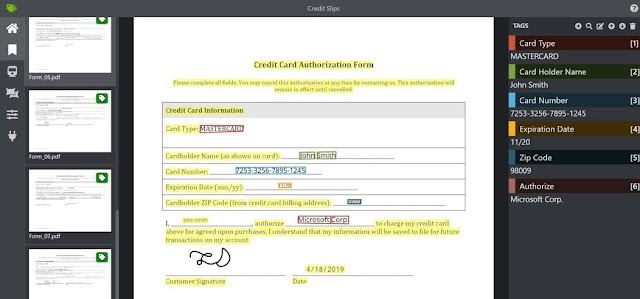
Azure Study Materials, Azure Tutorial and Material, Azure Certifications, Azure Learning, Azure Online Exam

In addition, Form Recognizer can now train a single model without labels for all the different types of forms, and supports training on large datasets and analyzing large documents with the new AsyncAPI. This benefit enables customers to train a single model for the different types of invoices, purchase orders, and more without the need to classify the documents in advance.

We have also enhanced our pre-built receipts capabilities with accuracy improvements, additional new fields for tips, receipt types (itemized, credit card slip, gas, parking, other), and line item extraction detailing all the different items in the receipt. Finally, we have also improved the accuracy of our text recognition enabling extraction of high-quality text from the forms and our table extraction.

Sogeti, part of Capgemeni, is harnessing these new Form Recognizer capabilities. As Arun Kumar Sahu, the Manager of AI ML for Sogeti notes:

“We are working on a document classification and predictive solution for one of the largest automobile auction companies in the US, and needed an efficient way to extract information from various automobile related documents (PDF or image). Form Recognizer was quick and easy to train and host, was cost effective, handled different document formats, and the output was amazing. The new labelling features made it very effective to customize key value pair extraction.”

Speech: Enable more natural interactions and accelerate productivity with advanced speech capabilities


Businesses want to be able to modernize and enable more seamless, natural interactions with their customers. Our latest advancements in speech allow customers to do just that.

At Microsoft Ignite 2018, we introduced our neural text-to-speech capability, which uses deep neural networks to enable natural-sounding speech and reduces listening fatigue for users interacting with AI systems. Neural text-to-speech can be used to make interactions with chatbots and virtual assistants more natural and engaging, convert digital texts such as e-books into audiobooks, and enhance in-car navigation systems. We’re excited to build upon these advancements with the Custom Neural Voice capability, which enables customers to build a unique brand voice, starting from just a few minutes of training audio. The Custom Neural Voice capability can enable scenarios such as customer support provided by a company’s branded character, interactive lesson plans or guided museum tours, and voice assistive technologies. The capability also supports generating long-form content, including audiobooks.

The Beijing Hongdandan Education and Culture Exchange Center is dedicated to using audio to create accessible products for those with visual impairments and improving the lives of the visually impaired by providing aids such as audiobooks. Hongdandan is using the Custom Neural Voice capability to produce audiobooks based on the voice of Lina, who lost her sight at the age of 10. Lina is now a trainer at the Hongdandan Service Center, using her voice to teach others who are visually impaired to communicate well.

With the rapid pace at which business is moving today, remembering all the details from your last important meeting and tracking next steps and key deadlines can be a real challenge. Quickly and accurately transcribing calls can help various stakeholders stay on the same page by capturing critical details and making it easy to search and review topics you discussed. In customer support scenarios, being able to hear and understand your customers and keep an accurate record of information is critical for tracking customer requirements and enabling broader analysis.

However, accurately transcribing organization-specific terms like product names, technical terms, and people's names pose another barrier. With Custom Speech, you can tailor speech recognition models based on your own data so that your unique terms are accurately captured. Simply upload your audio to train a custom model. Now, you can also optimize speech recognition on your organization-specific terms by automatically generating custom models using your Office 365 data in a secure and compliant fashion. With this opt-in feature, organizations using Office 365 can more accurately transcribe company terminology, whether in internal meetings or on customer calls. The organization-wide language model is built only using conversations and documents from public groups that everyone in the organization can access.

Additional new features such as Custom Commands, Custom Speech and Voice containers, Speech Translation with automatic language identification, and Direct Line Speech channel integration with Bot Framework are making it easier to quickly embed advanced speech capabilities into your apps.

Language: Extract deeper insights from customer feedback and text documents


There are a multitude of valuable customer insights captured today—whether in social media, customer reviews, or discussion forums. The challenge is being able to extract insights from that data, so businesses can act fast to improve customer service and meet the needs of the market. With the Text Analytics Sentiment Analysis capability, businesses can easily detect positive, neutral, negative, and mixed sentiment in content, enabling them to keep an ongoing pulse on customer satisfaction, better engage their customers, and build customer loyalty. The latest release of the Sentiment Analysis capability offers greater accuracy in sentiment scoring, as well as the ability to detect sentiment for both an entire document as well as individual sentences.

Another challenge of extracting information from your data is being able to take unstructured natural language text and identify occurrences of entities such as people, locations, organizations, and more. Text Analytics is expanding entity type support to more than 100 named entity types, making it easier than ever to extract meaningful information and analyze relationships from raw text and between terms. Additionally, customers will now be able to detect and extract more than 80 kinds of personally identifiable information in English language text documents.

We are also adding several new capabilities to Language Understanding Intelligent Service (LUIS) that enable developers to build sophisticated models that are conversational. The new capabilities provide the ability to handle more complex requests from users (as an example, if you want to allow customers to truly use natural language, they might order ‘Two Burgers with no onions and replace buns with lettuce wraps’). This provides customers with the advanced ability for hierarchical entities and model decomposition, to build more sophisticated language models that reflect the way humans speak. In addition, we are adding more regions and further enhancing the existing human languages supported in LUIS with the addition of Hindi and Arabic.

Enterprise Ready: Azure Virtual Network for enhanced data security


One of the most important considerations when choosing an AI service is security and regulatory compliance. Can you trust that the AI is being processed with the high standards and safeguards that you come to expect with hardened, durable software systems? Azure Cognitive Services offers over 70 certifications. Today we are offering Virtual Network support as part of Cognitive Services to ensure maximum security for sensitive data. This service also is being made available in a container that can run in a customer’s Azure subscription or on-premises.

Thursday, 5 December 2019

Enabling collaborative bot development across your organization for any user

Conversational artificial intelligence (AI) is enabling organizations to improve their business in areas like customer service and employee engagement by automating some of the most commonly requested services, which frees up employees to take on more value-adding activities. While the benefits of conversational AI are well established, determining who in an organization should build these solutions is not always clear.

As is true of many applications, conversational AI solutions (or bots) can be built using software-as-a-service (SaaS) or platform-as-a-service (PaaS) offerings. Consequently, organizations are forced to decide between empowering business users who are closest to the business problems or empowering developers with coding experience to have full control over how these solutions are built, without many options to bridge the gap and allow for collaboration between the two. However, with the integration of Bot Framework Skills into Microsoft Power Virtual Agents, Microsoft uniquely empowers both business users and developers to collaborate seamlessly in building conversational AI solutions.

In the bot building journey, bot builders across the organization should not work in siloes. If a business user is building a bot but wants to add a nuanced scenario, they should be able to collaborate with a developer who can customize the bot further. Similarly, developers building a bot can also leverage bots that have been built by business users as a skill.

Microsoft offers an end-to-end, no-cliffs bot building experience with Power Virtual Agents and Bot Framework.

◉ Power Virtual Agents provides a no-code experience for bot development – ideal for business users and domain experts to easily build a bot, without having to worry about the technical aspects of bot development.

◉ Bot Framework is an open-source SDK and tools purpose-built for bot development – ideal for developers who want to build a bot using a code experience and want full control of technical aspects of bot development, including language model ownership, and visual design. Additionally, Azure Bot Service allows developers to host and deploy their bots to popular channels like Teams and other messaging platforms where users will interact with the bot.

◉ Bot Framework Skills allows you to extend your bot – no matter your starting point. With Bot Framework Skills, Power Virtual Agents users have a no-cliff bot building experience because they can collaborate with Bot Framework developers to extend their bots with custom capabilities. Equally important, Bot Framework developers can extend their bots as a skill and allow subject matter experts to update bot conversations.

Azure Artificial Intelligence, Azure Tutorial and Material, Azure Certifications, Azure Online Exam

For example, suppose an organization is creating a travel bot using Power Virtual Agents. The business users build out the dialogs with a UI-based experience that allows the bot to handle customers’ intents, such as Check miles and rewards, Check flight status, Update account information, and Book a flight.

Azure Artificial Intelligence, Azure Tutorial and Material, Azure Certifications, Azure Online Exam

However, what if someone in the organization has already built a Book a Flight skill with custom language models using Bot Framework and Language Understanding service as illustrated below?

Azure Artificial Intelligence, Azure Tutorial and Material, Azure Certifications, Azure Online Exam

In this scenario, business experts can collaborate with the developer who has built this flight booking skill by selecting it as an action in Power Virtual Agents.

Azure Artificial Intelligence, Azure Tutorial and Material, Azure Certifications, Azure Online Exam

As conversational AI adoption continues to grow, we believe it is important for organizations to take an interdisciplinary team approach to bot development. For this reason, Microsoft offers an end-to-end, no-cliffs bot building experience that empowers business subject matter experts and developers alike to collaborate.

Tuesday, 3 December 2019

Edusum.com Review – Ideal Site for Microsoft Power BI Certification Preparation

When I passed my Microsoft Power BI 70-778 certification exam and shared my certification on LinkedIn, I received hundreds of likes and many comments with views crossing 45,000 (still counting!). This indicates tremendous interest in passing this exam, which is sometimes challenging for those who are new in the BI field. And I am writing this edusum.com review to know people how this site has helped me achieve my desired score.


To help Power BI aspirants, I decided to write down my edusum.com review to help other test takers follow a similar path to earn this certification.

My First Try was unsuccessful

This is to be stated that I passed this exam in my second attempt. I am sharing this edusum.com because this is not unusual for a person to fail in the first attempt. After having sufficient experience in Power BI was unable to pass this exam and scored around 665 when the passing score was 700. This has given me a lot of aspiration that if I fine-tune my learning, then I will be able to pass the 70-778 exam in my next attempt. What I learned from my first attempt that there were many scenario-based questions. These questions may consume your allotted time because if you are not reading it accurately, then you will try to read it every time. It is stated from where repeated scenarios start and end, so reading it once and understanding precisely will help you save your time. I gave a lot of time in my first attempt leaving less time to attempt other questions, so I need to rush, and that created confusion and errors.

MCSA 70-778 Certification ExamSyllabus Topics:

  • Consuming and Transforming Data By Using Power BI Desktop
  • Modeling and Visualizing Data
  • Configure Dashboards, Reports, and Apps in the Power BI Service

Significance of D DAX – Data Analysis Expressions


I can easily say that most of the questions concentrate on DAX, so you must have sound knowledge of it. Learning parameters, syntax, and sample implementations will help you grip it fully. Hands-on experience of DAX is necessary if you want to clear this exam. I did a lot of practice for time intelligence functions because these are present in the exam in good numbers. I downloaded a book, titled “Data Analysis Expressions (DAX) Reference SQL Server 2012 Books Online,” which helped me a lot in my preparation. This is to be pointed out that some new functions included in DAX are not present in this book, but most of the information is relevant, and it seems that Microsoft 70-778 exam questions have referred this book a lot.

Data Transformation


Data transformation is significant in practical scenarios because your BI relies a lot on clean data. You must carry out proper practice on all data transformation methods, primarily covering all menu options in Power BI desktop.

Maximum reading, learning and practice test

Microsoft provides a lot of study material for Power BI. You must plan your expertise by reading common topics as some answers are hidden within the contents. I went through a lot of material, and I must say that subscription plans were the most difficult part for me as it defines what can be shared with internal and external users. Additionally, you must look into the configuration and setup part as well, along with Office 365 and Azure concerning topics involving Power BI. There are plenty of videos and textual content you can get from Microsoft.

Edusum.com Review


By offering authentic Exam Questionsfor Microsoft 70-778 certification, edusum.com helps you in earning your IT certificate fast and easy. MCSA BI Reporting 70-778 practice test is a complete package that contains accessible knowledge about the appropriate topics. It is based on questions and answers related to the exam’s structure. It offers a thorough practice. The proper study guide will give you the best preparation and make you confident and competent. However, timing is important in the 70-778 exam and this where practice tests help you a lot.

Sitting for an Exam


This is just a few common strategies that can help you for Microsoft exam:
  • Be ready for exam day. Get a good night’s rest, have a healthy breakfast, and get to the exam on time.
  • Read the question thoroughly. 
  • Learn to identify distractions and to neglect them, as they have nothing to do with the question.
  • First, eliminate the wrong answers, then consider what’s left.
  • Consider reading the answers first, then the question.
  • Be aware of time spent on each question, and don’t spend too much time on a tough one. Come back to it later if needed.

As an outcome of this edusum.com review, I wish my learning experience for the BI Reporting 70-778 exam will be beneficial to future aspirants. 

Application Gateway Ingress Controller for Azure Kubernetes Service

Today we are excited to offer a new solution to bind Azure Kubernetes Service (AKS) and Application Gateway. The new solution provides an open source Application Gateway Ingress Controller (AGIC) for Kubernetes, which makes it possible for AKS customers to leverage Application Gateway to expose their cloud software to the Internet.

Bringing together the benefits of the Azure Kubernetes Service, our managed Kubernetes service, which makes it easy to operate advanced Kubernetes environments and Azure Application Gateway, our native, scalable, and highly available, L7 load balancer has been highly requested by our customers.

How does it work?


Application Gateway Ingress Controller runs in its own pod on the customer’s AKS. Ingress Controller monitors a subset of Kubernetes’ resources for changes. The state of the AKS cluster is translated to Application Gateway specific configuration and applied to the Azure Resource Manager. The continuous re-configuration of Application Gateway ensures uninterrupted flow of traffic to AKS’ services. The diagram below illustrates the flow of state and configuration changes from the Kubernetes API, via Application Gateway Ingress Controller, to Resource Manager and then Application Gateway.

Much like the most popular Kubernetes Ingress Controllers, the Application Gateway Ingress Controller provides several features, leveraging Azure’s native Application Gateway L7 load balancer. To name a few:

◉ URL routing

◉ Cookie-based affinity

◉ Secure Sockets Layer (SSL) termination

◉ End-to-end SSL

◉ Support for public, private, and hybrid web sites

◉ Integrated web application firewall

Azure Study Materials, Azure Certifications, Azure Guides, Azure Tutorial and Materials, Azure Online Exam

The architecture of the Application Gateway Ingress Controller differs from that of a traditional in-cluster L7 load balancer. The architectural differences are shown in this diagram:

Azure Study Materials, Azure Certifications, Azure Guides, Azure Tutorial and Materials, Azure Online Exam

◉ An in-cluster load balancer performs all data path operations leveraging the Kubernetes cluster’s compute resources. It competes for resources with the business apps it is fronting. In-cluster ingress controllers create Kubernetes Service Resources and leverage kubenet for network traffic. In comparison to Ingress Controller, traffic flows through an extra hop.

◉ Ingress Controller leverages the AKS’ advanced networking, which allocates an IP address for each pod from the subnet shared with Application Gateway. Application Gateway has direct access to all Kubernetes pods. This eliminates the need for data to pass through kubenet. 

Solution performance


As a result of Application Gateway having direct connectivity to the Kubernetes pods, the Application Gateway Ingress Controller can achieve up to 50 percent lower network latency vs in-cluster ingress controllers. Application Gateway is a managed service, backed by Azure virtual machine scale sets. As a result, Application Gateway does not use AKS compute resources for data path processing. It does not share or interfere with the resources allocated to the Kubernetes deployment. Autoscaling Application Gateway at peak times, unlike an in-cluster ingress, will not impede the ability to quickly scale up the apps’ pods. And of course, switching from in-cluster L7 ingress to Application Gateway will immediately decrease the compute load used by AKS.

We compared the performance of an in-cluster ingress controller and Application Gateway Ingress Controller on a three node AKS cluster with a simple web app running 22 pods per node. A total of 66 web app pods shared resources with three in-cluster ingresses – one per node. We configured Application Gateway with an instance count of two. We used Apache Bench to create a total of 100K requests with concurrency set at 3K requests. We launched Apache Bench twice: once pointing it to the SLB fronting the in-cluster ingress controller, and a second time connecting to the public IP of Application Gateway. On this very busy AKS cluster we recorded the mean latency across all requests:

◉ Application Gateway: 480ms per request
◉ In-cluster Ingress: 710ms per request

As proven by the data gathered above, under heavy load, the in-cluster ingress controller has approximately 48 percent higher latency per request compared to Application Gateway ingress. Running the same benchmark on the same cluster but with two web app pods per node, a total of six pods, we observed the in-cluster ingress controller performing with approximately 17 percent higher latency than Application Gateway.

Sunday, 1 December 2019

Azure SQL Data Warehouse is now Azure Synapse Analytics

Azure Synapse is a limitless analytics service that brings together enterprise data warehousing and Big Data analytics. It gives you the freedom to query data on your terms, using either serverless on-demand or provisioned resources—at scale. Azure Synapse brings these two worlds together with a unified experience to ingest, prepare, manage, and serve data for immediate business intelligence and machine learning needs.

With Azure Synapse, data professionals can query both relational and non-relational data using the familiar SQL language. This can be done using either serverless on-demand queries for data exploration and ad hoc analysis or provisioned resources for your most demanding data warehousing needs. A single service for any workload.

In fact, it’s the first and only analytics system to have run all the TPC-H queries at petabyte-scale. For current SQL Data Warehouse customers, you can continue running your existing data warehouse workloads in production today with Azure Synapse and will automatically benefit from the new preview capabilities when they become generally available.

Azure SQL Data Warehouse, Azure Synapse Analytics, Azure Study Materials, Azure Tutorial and Material, Azure Online Exam

Taking SQL beyond data warehousing


A cloud native, distributed SQL processing engine is at the foundation of Azure Synapse and is what enables the service to support the most demanding enterprise data warehousing workloads. This week at Ignite we introduced a number of exciting features to make data warehousing with Azure Synapse easier and allow organizations to use SQL for a broader set of analytics use cases.

Unlock powerful insights faster from all data

Azure Synapse deeply integrates with Power BI and Azure Machine Learning to drive insights for all users, from data scientists coding with statistics to the business user with Power BI. And to make all types of analytics possible, we’re announcing native and built-in prediction support, as well as runtime level improvements to how Azure Synapse handles streaming data, parquet files, and Polybase. Let’s dive into more detail:

◉ With the native PREDICT statement, you can score machine learning models within your data warehouse—avoiding the need for large and complex data movement. The PREDICT function (available in preview) relies on open model framework and takes user data as input to generate predictions. Users can convert existing models trained in Azure Machine Learning, Apache Spark™, or other frameworks into an internal format representation without having to start from scratch, accelerating time to insight.

Azure SQL Data Warehouse, Azure Synapse Analytics, Azure Study Materials, Azure Tutorial and Material, Azure Online Exam

◉ We’ve enabled direct streaming ingestion support and ability to execute analytical queries over streaming data. Capabilities such as: joins across multiple streaming inputs, aggregations within one or more streaming inputs, transform semi-structured data and multiple temporal windows are all supported directly in your data warehousing environment (available in preview). For streaming ingestion, customers can integrate with Event Hubs (including Event Hubs for Kafka) and IoT Hubs.

◉ We’re also removing the barrier that inhibits securely and easily sharing data inside or outside your organization with Azure Data Share integration for sharing both data lake and data warehouse data.

◉ By using new ParquetDirect technology, we are making interactive queries over the data lake a reality (in preview). It’s designed to access Parquet files with native support directly built into the engine. Through improved data scan rates, intelligent data caching and columnstore batch processing, we’ve improved Polybase execution by over 13x.

Azure SQL Data Warehouse, Azure Synapse Analytics, Azure Study Materials, Azure Tutorial and Material, Azure Online Exam

Workload isolation


To support customers as they democratize their data warehouses, we are announcing new features for intelligent workload management. The new Workload Isolation functionality allows you to manage the execution of heterogeneous workloads while providing flexibility and control over data warehouse resources. This leads to improved execution predictability and enhances the ability to satisfy predefined SLAs.

Azure SQL Data Warehouse, Azure Synapse Analytics, Azure Study Materials, Azure Tutorial and Material, Azure Online Exam

COPY statement


Analyzing petabyte-scale data requires ingesting petabyte-scale data. To streamline the data ingestion process, we are introducing a simple and flexible COPY statement. With only one command, Azure Synapse now enables data to be seamlessly ingested into a data warehouse in a fast and secure manner.

This new COPY statement enables using a single T-SQL statement to load data, parse standard CSV files, and more.

COPY statement sample code:

COPY INTO dbo.[FactOnlineSales] FROM ’https://contoso.blob.core.windows.net/Sales/’

Safe keeping for data with unmatched security


Azure has the most advanced security and privacy features in the market. These features are built into the fabric of Azure Synapse, such as automated threat detection and always-on data encryption. And for fine-grained access control businesses can ensure data stays safe and private using column-level security, native row-level security, and dynamic data masking (now generally available) to automatically protect sensitive data in real time.

To further enhance security and privacy, we are introducing Azure Private Link. It provides a secure and scalable way to consume deployed resources from your own Azure Virtual Network (VNet). A secure connection is established using a consent-based call flow. Once established, all data that flows between Azure Synapse and service consumers is isolated from the internet and stays on the Microsoft network. There is no longer a need for gateways, network addresses translation (NAT) devices, or public IP addresses to communicate with the service.

Azure SQL Data Warehouse, Azure Synapse Analytics, Azure Study Materials, Azure Tutorial and Material, Azure Online Exam